Fragomen Monthly MENA Newsletter: Insights on Immigration, Corporate, Social Security and Destination Services in the MENA Region
Date Posted:Wed, 18th Feb 2026

This newsletter provides timely insights across immigration, corporate, social security, and destination services, helping organizations stay informed and adapt to evolving regulatory and operational changes.
UNITED ARAB EMIRATES
26 January 2026 – Stricter Eligibility Criteria Implemented for Remote Working Visa
Applicants applying for the Remote Working Visa must now provide bank statements for the last six months; whereas previously only three months were required. As the bank statements are used as proof of regular income through salary deposits, this change effectively requires individuals to have been employed by their overseas employer for a minimum of six months, instead of the previous three-month requirement.
19 January 2026 – Reminder: Free Zone Companies Carrying Out Activities in Dubai Mainland – Compliance Deadline Approaching
Dubai free zone companies (excluding DIFC-licensed financial entities) carrying out activities in Dubai mainland must regularise their status ahead of the March 21, 2026, compliance deadline. Approvals from both the free zone authority and the Dubai Department of Economy and Tourism are required. While the authorities retain discretion to extend this deadline, no formal extension has been announced to date.
Eligible free zone companies conducting activities in Dubai mainland must obtain the relevant approval from their respective free zone authority and one of the following from the Dubai Department of Economy and Tourism (DET):
- A one-year renewable licence to establish a branch of the company in Dubai; or
- A one-year renewable licence to establish a branch of the company with its headquarters remaining within the free zone; or
- A six-month renewable permit to practice certain approved activities in the Dubai mainland.
Other requirements:
- Comply with all local and federal regulations.
- Maintain separate financial records for mainland activities.
- Conduct only DET-approved activities.
SAUDI ARABIA
9 February 2026 - Introduction of Unified Digital Framework for Property Ownership
Saudi Arabia has introduced a new unified, digital framework allowing foreign nationals, companies and entities to own property in various regions through a standardized and transparent process, expanding the ownership options and replacing the previously restrictive and case-by-case system. This reform is expected to increase foreign investment, improve market efficiency, and help facilitate and support the Saudi Vision 2030 objectives.
Under the new rules, foreign national residents and non-residents, and foreign companies can submit an application to own a property through a unified digital platform, the Saudi Properties. The process is standardized and transparent with clear eligibility checks and registration requirements. While ownership will be permitted in many areas, major cities such as Riyadh and Jeddah and the holy cities of Mecca and Medina will remain subject to special restrictions, with Mecca and Medina largely limited to Saudi companies and Muslim owners
6 February 2026 - New Payment Methods for GOSI Social Security Contributions
Effective immediately, the General Organization for Social Insurance has introduced new payment methods for monthly social security contributions. Employers can now settle contributions directly through the General Organization for Social Insurance online portal, using either virtual account details or an online credit card payment. Previously, this was only possible via bank transfer.
To facilitate the transition, all companies registered with the General Organization for Social Insurance (GOSI) will receive an email containing their unique virtual account number.
New Payment Options
1. Virtual Account Payment
Each company will be assigned a unique virtual account number, which will appear on the monthly bill summary or invoice downloaded from the GOSI portal. Payments can be made via bank transfer to this virtual account and using it eliminates the need to email payment proof to GOSI.
2. Online Payment via GOSI Portal (Credit Card)
Employers can now pay contributions directly on the portal using a credit card. The portal allows users to select the exact amount to be paid, and payment receipts are generated instantly and stored within the system.
The previous bank transfer method has been discontinued and is no longer operational.
Portal Access Requirement
All entities must maintain an active GOSI online portal account, as all payments and receipts will now be tracked online. Contribution bills, virtual account details, and pay-ment receipts will be available only through the employer portal. Employers are required to download invoices and track payments directly within the portal.
6 February 2026 - Increased Saudization Requirements for Sales and Marketing Professions
The Ministry of Human Resources and Social Development (MHRSD) has announced that private-sector businesses employing three or more workers in ten marketing professions, including marketing manager, public relations manager, marketing specialist, graphic designer, must ensure that 60% of such roles (up from the current 30%) are filled by Saudi nationals by April 19, 2026.
Saudi marketing professionals will be counted toward the Saudization percentage only if their monthly salary registered with the General Organization for Social Insurance is at least SAR 5,500; if it is below, they will not be counted.
Separately, the MHRSD announced that private-sector businesses employing three or more workers in nine sales professions, including sales manager, sales specialist, sales representative, commodity broker, must ensure that 60% of such roles (up from the current 15% for businesses employing five or more workers in certain sales professions) are filled by Saudi nationals by April 19, 2026.
5 February 2026 - Temporary Suspension on Issuance of Temporary Work Visas for Select Nationals
Effective immediately, based on what we have observed and experienced in practice, Saudi Arabia has temporarily suspended the issuance of Temporary Work Visas for select nationals.
Though there has not been a government announcement, based on what we have ob-served and experienced in practice, Saudi Arabia has temporarily suspended the issuance of Temporary Work Visas for nationals of Algeria, Egypt, Ethiopia, India, Indonesia, Iran, Iraq, Jordan, Libya, Morocco, Nigeria, Pakistan, Somalia, Sudan, Tunisia, Turkey and Yemen.
29 January 2026 - Increased Saudization Requirements for Engineering and Procurement Sectors
The Ministry of Human Resources and Social Development (MHRSD) has announced that private-sector businesses employing five or more accredited engineers in 46 engineering professions, including oil and gas engineer, mechanical engineer, chemical engineer, electrical engineer, and civil engineer, must ensure that 30% of such roles (up from the current 25%) are filled by Saudi nationals by June 30, 2026.
The MHRSD has also announced that the minimum monthly salary for Saudi engineers will also increase from SAR 7,000 to SAR 8,000.
As was the case previously, all engineers regardless of nationality, must be accredited by the Saudi Council of Engineers, as only accredited engineers will count toward the company’s Saudization percentage. In addition, the engineer’s monthly salary must be registered with the General Organization for Social Insurance. Saudi engineers earning less than SAR 8,000 per month are excluded from this calculation.
Separately, the MHRSD announced that private-sector firms employing three or more employees across 12 procurement professions, including procurement manager, contract manager, logistics manager and market research specialist, must ensure that 70% of such roles (up from the current 50%) are filled by Saudi nationals by May 31, 2026.
21 January 2026 - Landlord Notice Period Extended for Non-Renewal of Residential Leases
Saudi Arabia has issued new regulations requiring landlords to provide tenants with at least one year’s written notice before a residential lease expires if they do not intend to renew the residential lease because they plan to live in the property themselves or give it to a close relative (parent, child, or spouse).
Previously, landlords were required to give a much shorter notice, often 60 to 90 days, depending on the lease terms and regulations. This applied even where the landlord intended to use the property for personal or family purposes.
QATAR
4 February 2026 - Long-Term Residence Permit for Executives and Entrepreneurs Announced
The launch of a long-term residence program for Executives and Entrepreneurs has been announced by the government of Qatar.
Under the newly announced Residency Program, Executives and Entrepreneurs who are nominated by their employer or obtain an endorsement approval from specified business incubators in Qatar and meet certain eligibility conditions may apply for a residence permit to work and reside in Qatar for up to 10-years.
Additional benefits of the program include the ability to sponsor dependents and domestic workers, asset ownership and merchant discounts.
Eligibility conditions
To be eligible under the “Executive” category, the applicant must be nominated by their registered employer and must:
- have valid residency in Qatar;
- earn a minimum monthly salary of at least QAR 50,000 (approx. USD 13,736) for the following positions: Chairman, CEO, CFO, CTO, COO; or
- earn a minimum monthly salary of at least QAR 80,000 (approx. USD 21,978) for other executive director titles;
- have a minimum of five-years of experience in a senior executive management position, inside or outside Qatar, within a company or other organisation;
- have a valid employment contract with an employer in Qatar classified under one of the following categories:
- Public shareholding companies listed on the Qatar Stock Exchange.
- Banks and financial institutions licensed by Qatar Central Bank.
- Insurance companies licensed by Qatar Central Bank or the Qatar Financial Markets Authority (QFMA).
- Consulting firms operating in the fields of management, finance, legal, and accounting services for governmental and semi-governmental entities.
To be eligible under the “Entrepreneur” category, the applicant must be an entrepreneur launching or expanding a business, be nominated by an approved business incubator in Qatar and must:
- obtain an endorsement letter from a recognized business incubator in Qatar; and
- provide bank statements with a minimum balance of at least QAR 36,500 (approx. USD 10,000), or the equivalent in local currency, maintained over the past three months.
Documentary requirements
Applicants in the “Executive” category must have:
- Qatar Identity Card (QID);
- digital photograph;
- last three months bank statements (signed and stamped);
- attested experience letter;
- curriculum vitae (CV);
- attested educational degree; and
- valid health insurance.
In addition to the following documents from the employer:
- valid establishment card;
- company commercial registration;
- recently issued employment letter; and
- employment contract.
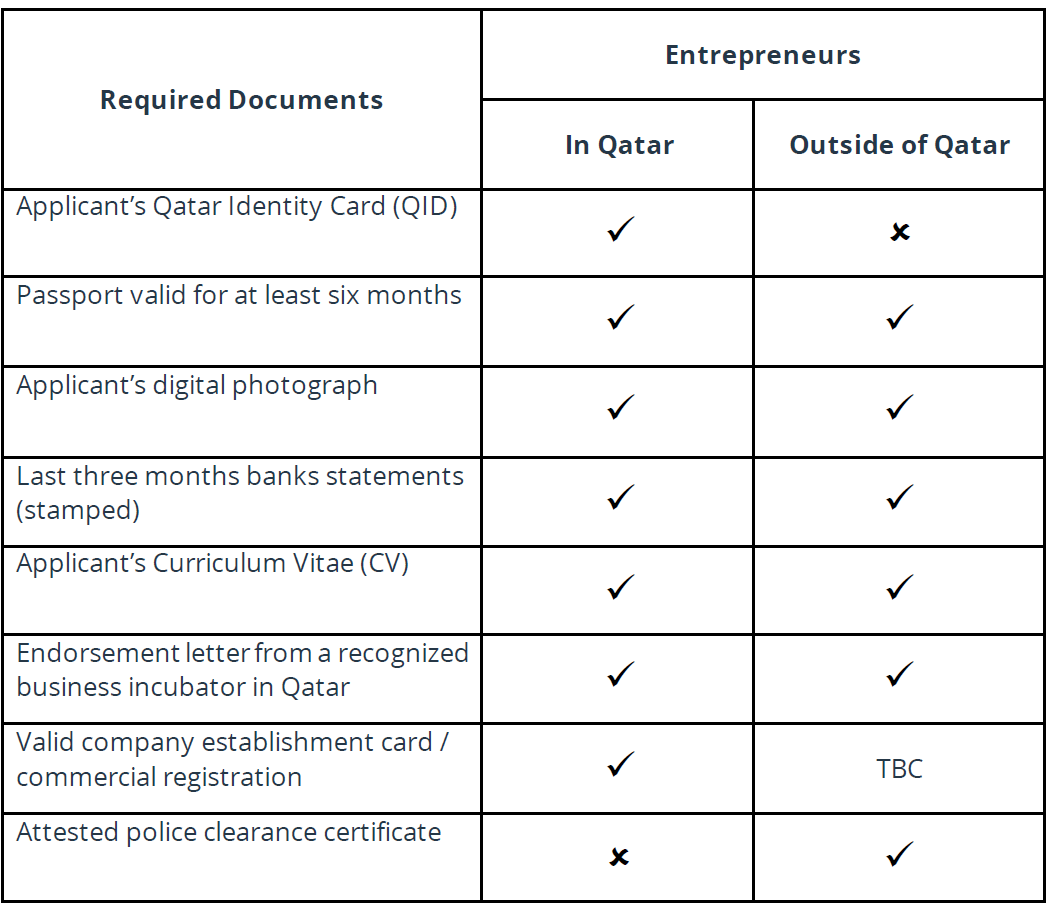
Applicants in the “Entrepreneur” category depending on whether the individual is in Qatar or outside of Qatar must have:
Application process
Foreign nationals eligible under the “Executive” category must first express interest to their employer, who then nominates the executive. Once nominated, the executive must submit the application and upload the required documentation. Upon approval, the employer will receive confirmation from the Ministry of Labour that the executive now holds a new non-sponsored immigration status, and a new Qatar Identity Card (QID) will be issued.
Foreign nationals eligible under the “Entrepreneur” category must first be nominated by one of the approved business incubators. The incubator then nominates the entrepreneur and submits an endorsement letter in support of the application. Following nomination, the entrepreneur must submit the application form and upload the required documentation. Upon approval, an Entry Visa will be issued, or, if the person is already in Qatar, a Qatar Identity Card (QID) is issued.
KUWAIT
26 January 2026 - Multiple-Trip Exit Permit Announced
The Public Authority for Manpower has announced the introduction of a multiple-trip exit permit for foreign national workers. The permit allows foreign national employees to exit and re-enter Kuwait multiple times within a defined validity period, rather than applying for a single trip exit permit for each trip.
Foreign national employees can apply for the multiple-trip exit permit for several departures and re-entries within a set period of time, rather than applying for a separate permit for each trip.
Employers and foreign nationals can apply online through the Ashal portal or the Sahel application and choose between single- or multiple-trip permit options and specify the permit duration by entering the start and end dates.
Employers also have the option to grant pre-approval for exit permits for one worker, groups of workers, or their entire workforce under a specific license or file. An exception feature allows employers to approve all workers while excluding certain individuals, and preapprovals can be modified, suspended, or cancelled at any time.
OMAN
16 February 2026 - Visa-Free Entry in Effect for Türkiye Nationals Entering Oman
Effective immediately, nationals of Türkiye can now enter Oman without a visa for tour-ism purposes, for up to 30 consecutive days per visit, with a total stay not exceeding 90 days within a 180-day period.
Omani nationals have been able to enter Türkiye for tourism and business stays of up to 90 days within a 180-day period since 2024.
To be able to enter visa free, individuals must have a passport with a minimum of six months validity from the intended date of entry, valid health insurance, and a return or onward ticket. Individuals travelling for other purposes (including study or work) must continue to obtain a relevant visa in advance.
It is currently unclear whether Turkish nationals can enter Oman without a visa for business travel.
3 February 2026 - Mandatory Company Registration on Tawteen Platform
Registration on the Tawteen platform is now mandatory for all companies operating in Oman, regardless of size or sector. In practice, enforcement remains limited and is mainly applied to companies involved in government projects or regulated sectors, such as banking, energy, telecommunications, finance and healthcare.
Tawteen is a government-launched platform aimed at promoting Omanization (the employment of Omani nationals) in line with Oman Vision 2040. It serves as a platform for recruitment, processing of labor clearances and visa requests for employees and tracking of Omanization ratios and compliance.
To register on the Tawteen platform, companies must nominate an employee who will have sole access to the platform and provide their details, including name, email address and mobile number for verification purposes.
EGYPT
12 February 2026 - Increase in Work Permit Fees for Foreign Nationals
Effective immediately, Egypt has increased the government fees applicable for work permits and short-term work authorization approvals for foreign workers.
The work permit fee for a period of one year has been increased to EGP 6,300 (up from EGP 5,200). As set out in the table below, the work permit fees will increase for each year of renewal as below:
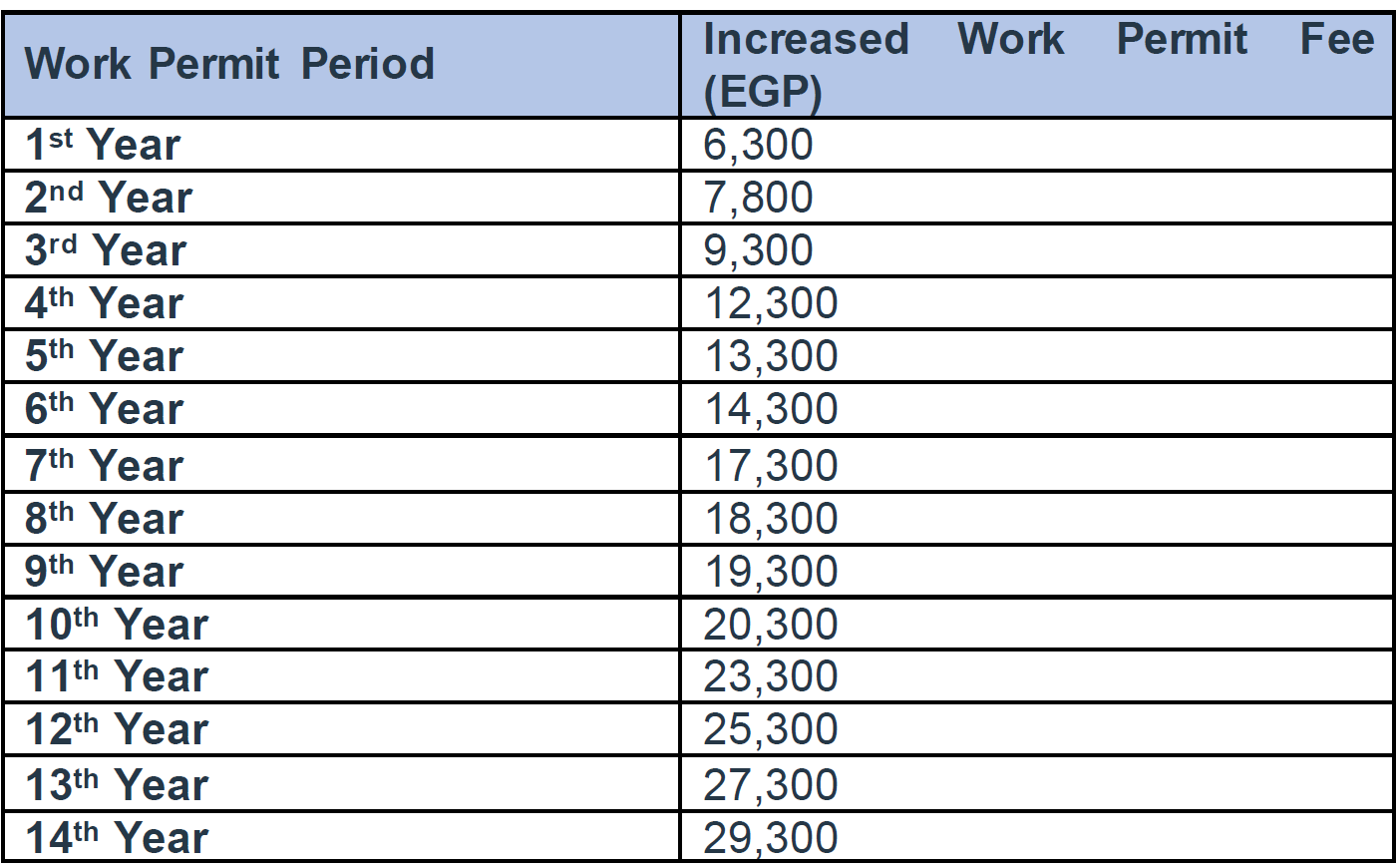
Effective from the 15th year, a yearly increase of EGP 2,000 will be applied, with the total fee not exceeding EGP 100,000.
Additionally, the government has significantly raised the fee for a 14day short-term work authorization approval to EGP 15,305 (up from EGP 8,200).
This change aims to encourage hiring of Egyptian nationals where possible and reduce the costs incurred by the employer.
MIDDLE EAST
3 February 2026 - Potential Delays During Ramadan
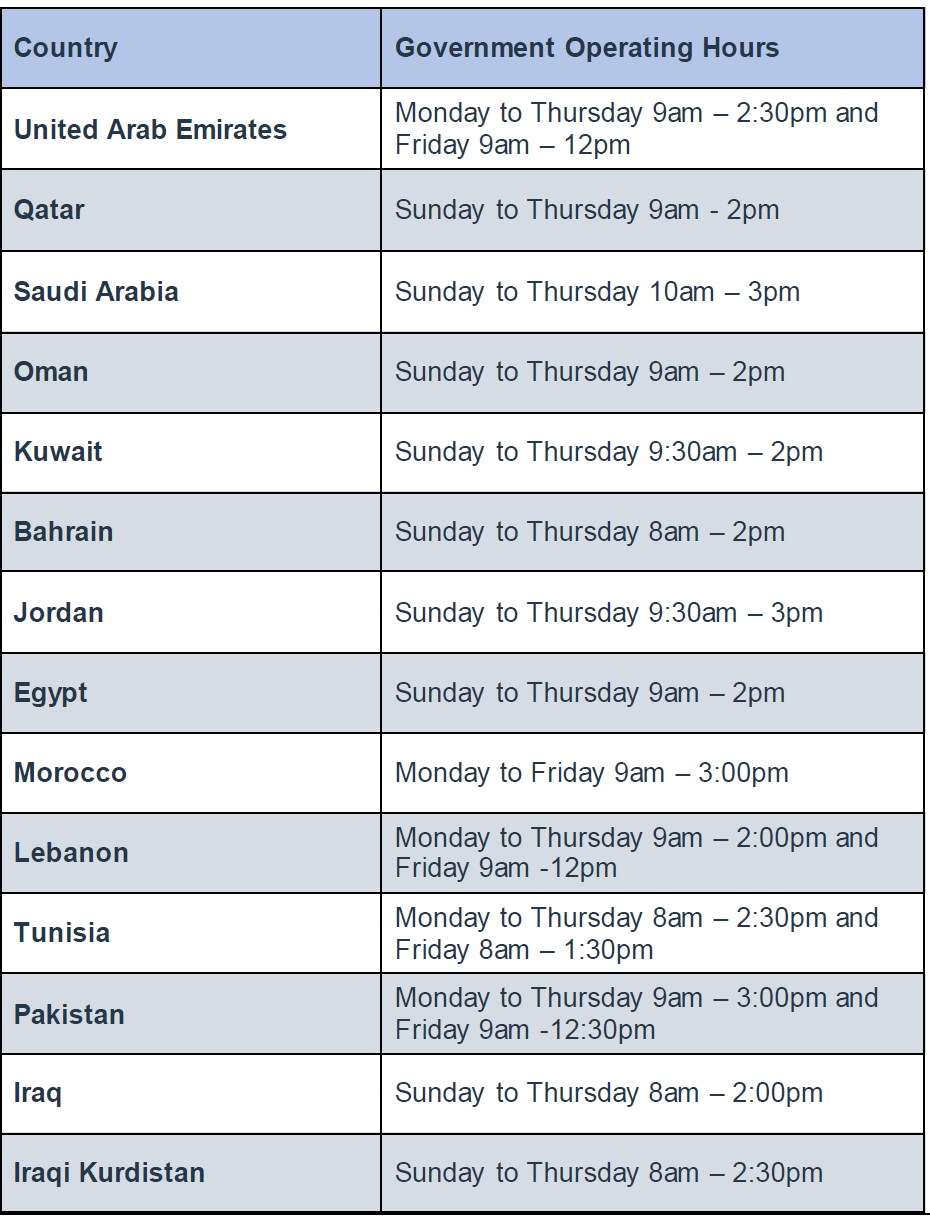
Government offices across the Middle East, North Africa and parts of Asia will be working reduced hours during the month of Ramadan, which may affect processing times for all immigration applications due to the reduced hours. Foreign nationals and employers should expect processing delays which can continue in the weeks following Ramadan. This year, the month of Ramadan is expected to begin on February 18 or February 19 and end on March 19, or March 20, 2026. However, the exact dates will be determined by lunar sighting and announced individually for each country. Government operating hours during Ramadan are expected to be as follows:
ABOUT FRAGOMEN
Fragomen is a leading firm dedicated to immigration services worldwide. The firm has nearly 5,500 professionals and staff in 62 offices located in the Americas, Asia Pacific and EMEA. Overall, Fragomen offers support in more than 170 countries.
We are structured to support all aspects of global immigration, including strategic planning, efficiency, quality management, compliance, government relations, reporting, and case management and processing. These capabilities allow us to represent a broad range of companies, organizations and individuals, working in partnership with clients to facilitate the transfer of employees worldwide.
Our Middle East and North Africa (MENA) practice also provides corporate services, including social security assistance, end-to-end corporate setup, corporate secretarial services, corporate amendments, restructuring activities and more. Our corporate services and immigration professionals have extensive experience working with multinational businesses, conglomerates, local employers, start-ups and individual investors. We have a deep understanding of the MENA region and maintain strong professional relationships with relevant authorities.
To learn more about how we can assist you, please visit our website at www.fragomen.com or contact us at [email protected].
Events Calendar
Upcoming Events

BCCD Business Briefing: The Financial Landscape - Trust, Regulations and the Road Ahead, Sponsored by Canaccord Wealth
Tue, 13th Oct 2026
voco Dubai
As the wealth and investment landscape evolves, so does the expectation around regulation ... Read more

BCCD Masterclass - Clarity in Chaos: Navigating Leadership Decisions
Wed, 14th Oct 2026
Hotel Indigo Dubai Downtown
Join us for “Clarity in Chaos: Navigating Leadership Decisions”, an immersive, high-st... Read more

BCCD Breakfast Networking
Wed, 21st Oct 2026
Reform Social & Grill
Kickstart your morning with valuable connections & conversations. This casual yet engaging... Read more


