Healthcare UK Insights from World Health Expo Dubai 2026
Date Posted:Mon, 16th Feb 2026

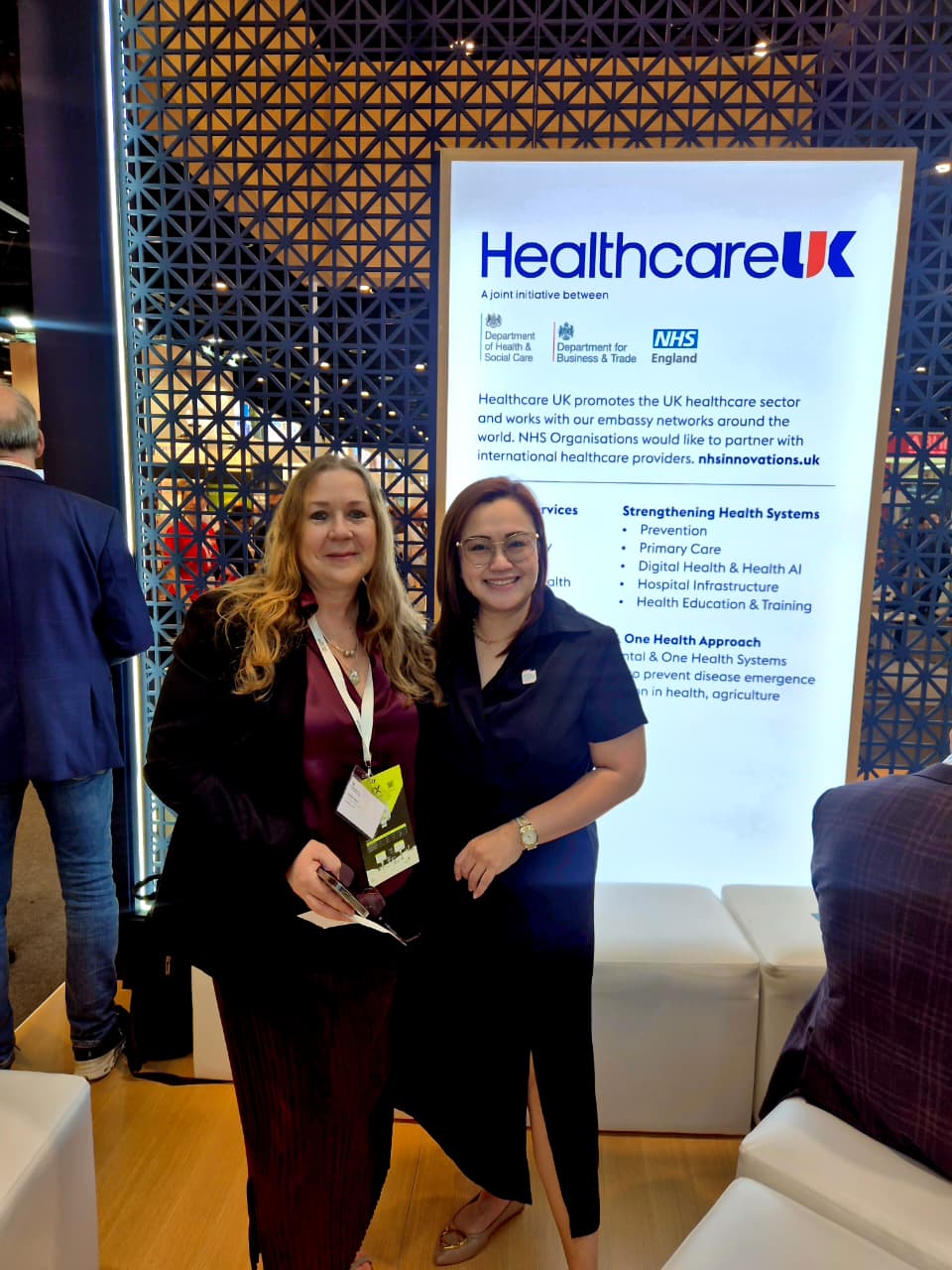
At World Health Expo this year, Healthcare UK, part of the UK's Department for Business and Trade (DBT) hosted a series of sessions at their stand showcasing the best of UK innovation, including presentations with key NHS Organisations.
The expert panel discussion The Prevention Engine explored how early diagnosis strengthens prevention, the role of data, and the importance of sustained, long-term investment in preventative healthcare.
Moderated by Healthcare UK Chair Aphrodite Spanou, the prevention session brought together Dr Oliver Long, Medical Director, King's College Hospital NHS Foundation Trust and Sheena Pirbhai, Founder & CEO, Stress Point Health.
Key takeaways from the panel discussion:
- Prevention as a capacity protector: Early intervention, stronger patient ownership and proactive conversations around lifestyle and mental well-being can reduce avoidable escalation into specialist care, protecting system capacity and resilience.
- UK-UAE collaboration: There is significant scope for knowledge exchange around technology-enabled prevention, integrated care models and medical education that prioritises prevention alongside treatment.
- Breaking down silos: Prevention must be embedded across primary, secondary, emergency and community care, supported by integrated systems, aligned policy and shared accountability rather than a hand-off model.
- Data as an enabler: Family health history, diagnosis and screening data allow earlier risk identification and more targeted interventions. Linking personal health apps with provider systems supports proactive, whole-person care.
- Taking the long view: Meaningful prevention requires investment beyond short funding or political cycles, with benefits assessed over a 10 to 15 year horizon, particularly in mental health and wider social determinants.
- The role of early diagnosis: Timely identification of conditions, including stress and anxiety in primary care, can prevent chronic escalation and reduce pressure on specialist services.
- What success looks like: A proactive system where technology, community-based care and patient responsibility work together seamlessly, reducing reliance on hospital-centred treatment and improving long-term population health.
To get in touch with the Healthcare UK team, who can also provide presentations from the sessions on request, please contact [email protected]

Events Calendar
Upcoming Events

BCCD Business Briefing: The Financial Landscape - Trust, Regulations and the Road Ahead, Sponsored by Canaccord Wealth
Tue, 13th Oct 2026
voco Dubai
As the wealth and investment landscape evolves, so does the expectation around regulation ... Read more

BCCD Masterclass - Clarity in Chaos: Navigating Leadership Decisions
Wed, 14th Oct 2026
Hotel Indigo Dubai Downtown
Join us for “Clarity in Chaos: Navigating Leadership Decisions”, an immersive, high-st... Read more

BCCD Breakfast Networking
Wed, 21st Oct 2026
Reform Social & Grill
Kickstart your morning with valuable connections & conversations. This casual yet engaging... Read more


