Sustainability Transition Plans and Capacity Building: A Strategic Imperative in the Sustainability Journey
Date Posted:Mon, 15th Sep 2025

In today’s global economy, sustainability is no longer a peripheral concern—it is a strategic necessity. The Arab region, particularly the Gulf Cooperation Council (GCC) countries, along with Jordan and Egypt, is undergoing a significant shift toward embedding sustainability into national visions, regulatory frameworks, and corporate governance.
This transformation is driven by the need for robust sustainability transition plans, capacity building, and alignment with global standards such as the Global Reporting Initiative (GRI) and the International Financial Reporting Standards (IFRS) S1 and S2.
Sustainability today also means building sustainable and profitable business models. Organizations must integrate sustainability directly into their business operating model, ensuring that financial success and environmental, social, and governance (ESG) performance reinforce each other.
Breaking the Myth: Sustainability Goes Beyond Solar Panels and EVs
A persistent misconception frames sustainability as merely the deployment of visible technologies such as solar panels or electric vehicles. While these innovations are valuable, they represent only a fraction of the broader agenda. True sustainability requires organizations to confront pressing climate change issues such as rising global temperatures, water scarcity, biodiversity loss, and increasing frequency of extreme weather events that directly threaten business continuity and societal resilience. And involves strategic governance, risk management, transparent reporting, organizational capacity building, and integration into business strategy.
Key components of sustainability include:
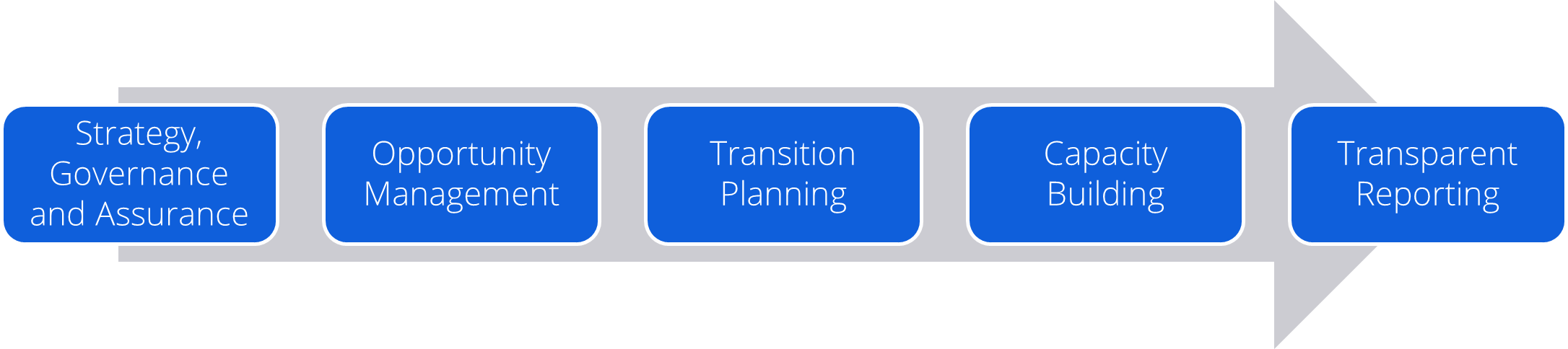
- Strategy, Governance and Assurance: Embedding sustainability within the organizational operating model and business framework.
- Opportunity Management: Identifying and addressing climate-related risks while capturing opportunities for innovation and growth.
- Transition Planning: Designing structured roadmaps that align business models with climate targets and investor expectations.
- Capacity Building: Developing internal expertise and literacy to implement and sustain ESG initiatives.
- Transparent Reporting: Reporting ESG performance in accordance with global standards (GRI, IFRS) and complying with regional disclosure requirements.
This broader understanding is essential as governments across the Arab region move from symbolic gestures to systemic transformation.
The Role of GRI and IFRS S1/S2 in Sustainability Governance
The GRI Standards provide comprehensive guidance on sustainability topics, including human rights, climate change, and social impact. IFRS S1 and S2, developed by the International Sustainability Standards Board (ISSB), complement GRI by focusing on financial materiality and climate-related disclosures. IFRS S1 outlines general sustainability-related financial reporting requirements, while IFRS S2 addresses climate-specific disclosures, including transition plans.
Together, these standards enable organizations to provide consistent, comparable, and decision-useful information to stakeholders, aligning sustainability goals with financial performance and national visions.
Regional Momentum:
- United Arab Emirates (UAE): Federal Decree-Law No. (11) of 2024 mandates carbon emissions management and requires sustainability disclosures aligned with GRI and IFRS S1/S2. This strengthens UAE’s Net Zero 2050 roadmap.
- Qatar: The Qatar Financial Centre Regulatory Authority (QFCRA) incorporates IFRS S1/S2 into its sustainability reporting framework, aligned with Vision 2030.
- Saudi Arabia (KSA): Vision 2030 integrates IFRS-aligned disclosure practices and GRI reporting as tools for investor transparency and ESG integration.
- Oman: Mandates Full Adoption of IFRS Sustainability Standards by 2029
- Kuwait: Recently passed legislation referencing IFRS sustainability standards and is exploring integration of GRI reporting to align with its Vision 2035 and new sustainability frameworks.
- Bahrain: The Central Bank of Bahrain and Bahrain Bourse are encouraging sustainability disclosures, aligning with both GRI and IFRS standards as part of the national Economic Vision 2030.
- Jordan: is among the first countries globally to implement IFRS/ISSB standards, led by the Amman Stock Exchange - after adopting GRI, it will move to voluntary reporting in January 2026, with mandatory reporting by the end of that year.
- Egypt: Vision 2030 emphasizes environmental sustainability, where GRI adoption is advanced and IFRS sustainability standards are being introduced to improve alignment with international investors.
Transition Plans: A Strategic Framework for Climate Action
A sustainability transition plan is a structured roadmap that guides organizations in aligning operations with climate goals and regulatory expectations. It is essential for managing risks, securing investor confidence, and achieving long-term sustainability.
Benefits of Transition Plans:
- Align sustainability with corporate strategy and profitability.
- Support climate risk modeling and ESG-inclusive ERM frameworks.
- Enhance transparency and attract sustainable investment.
- Address investor needs by providing credible, comparable data on climate and sustainability performance.
Steps to Develop a Robust Transition Plan:
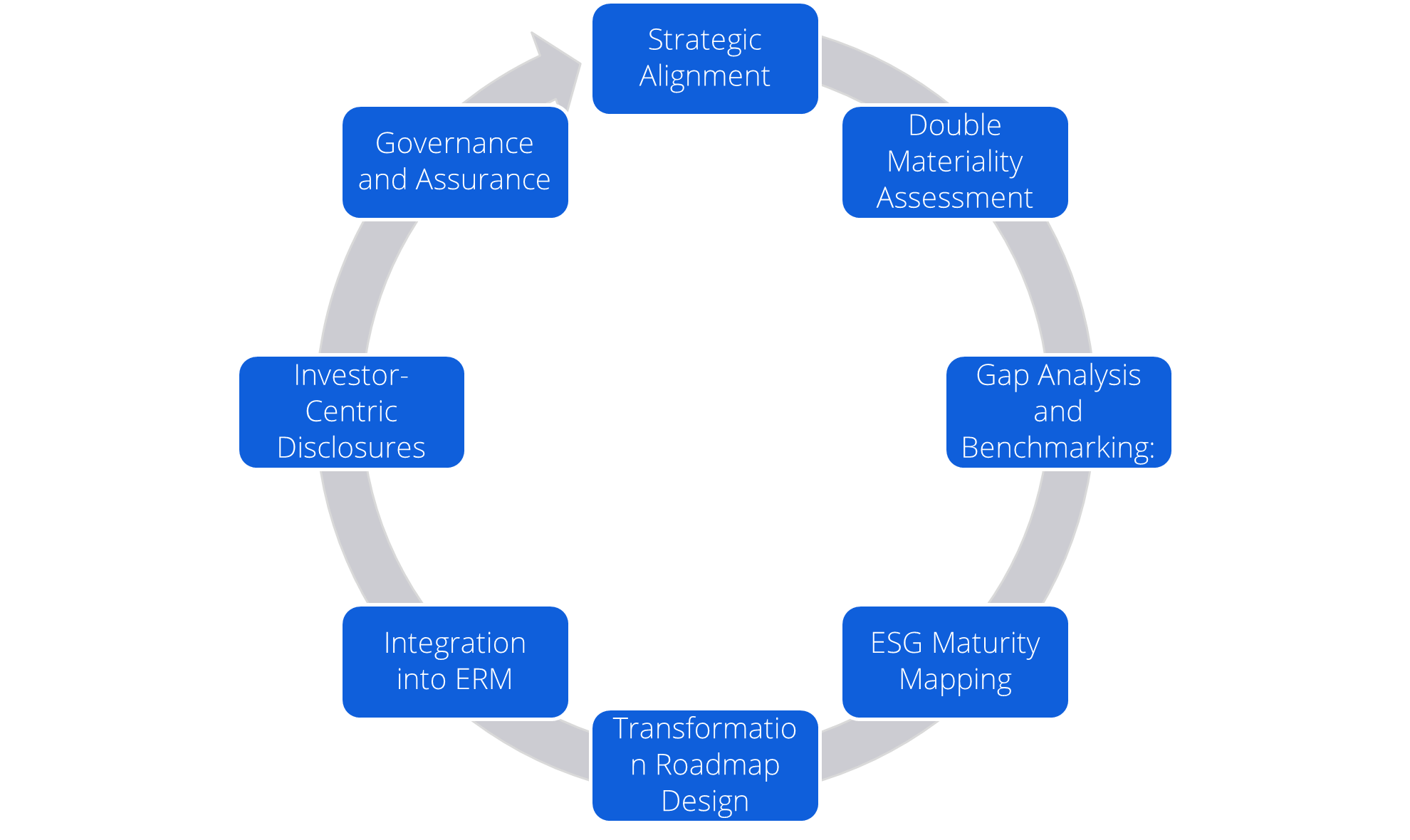
- Strategic Alignment: Define how sustainability goals align with corporate strategy, ensuring integration into the business operating model and profitability objectives.
- Double Materiality Assessment: Evaluate both financial materiality (investor relevance) and impact materiality (environmental and societal relevance) to identify priority issues.
- Gap Analysis and Benchmarking: Compare existing practices with GRI Standards, IFRS S1/S2, and investor expectations to identify strengths, weaknesses, and areas for improvement.
- ESG Maturity Mapping: Assess the organization’s current ESG maturity and readiness for transition, highlighting the capacity and resources needed for advancement.
- Transformation Roadmap Design: Develop clear actions, timelines, milestones, and KPIs to achieve identified sustainability and climate objectives.
- Integration into Enterprise Risk Management (ERM): Embed ESG factors into corporate risk registers, enabling proactive management of climate and sustainability risks.
- Investor-Centric Disclosures: Ensure transparent, credible, and comparable reporting that addresses investor needs, enhancing access to sustainable finance.
- Governance and Assurance: Establish oversight mechanisms, board engagement, and assurance processes to validate progress and reinforce accountability.
Capacity Building: The Foundation of Sustainability Success
Effective implementation of sustainability strategies requires internal capacity. Capacity building ensures that organizations have the knowledge, systems, and culture to support ESG initiatives.
Key Elements of Capacity Building:
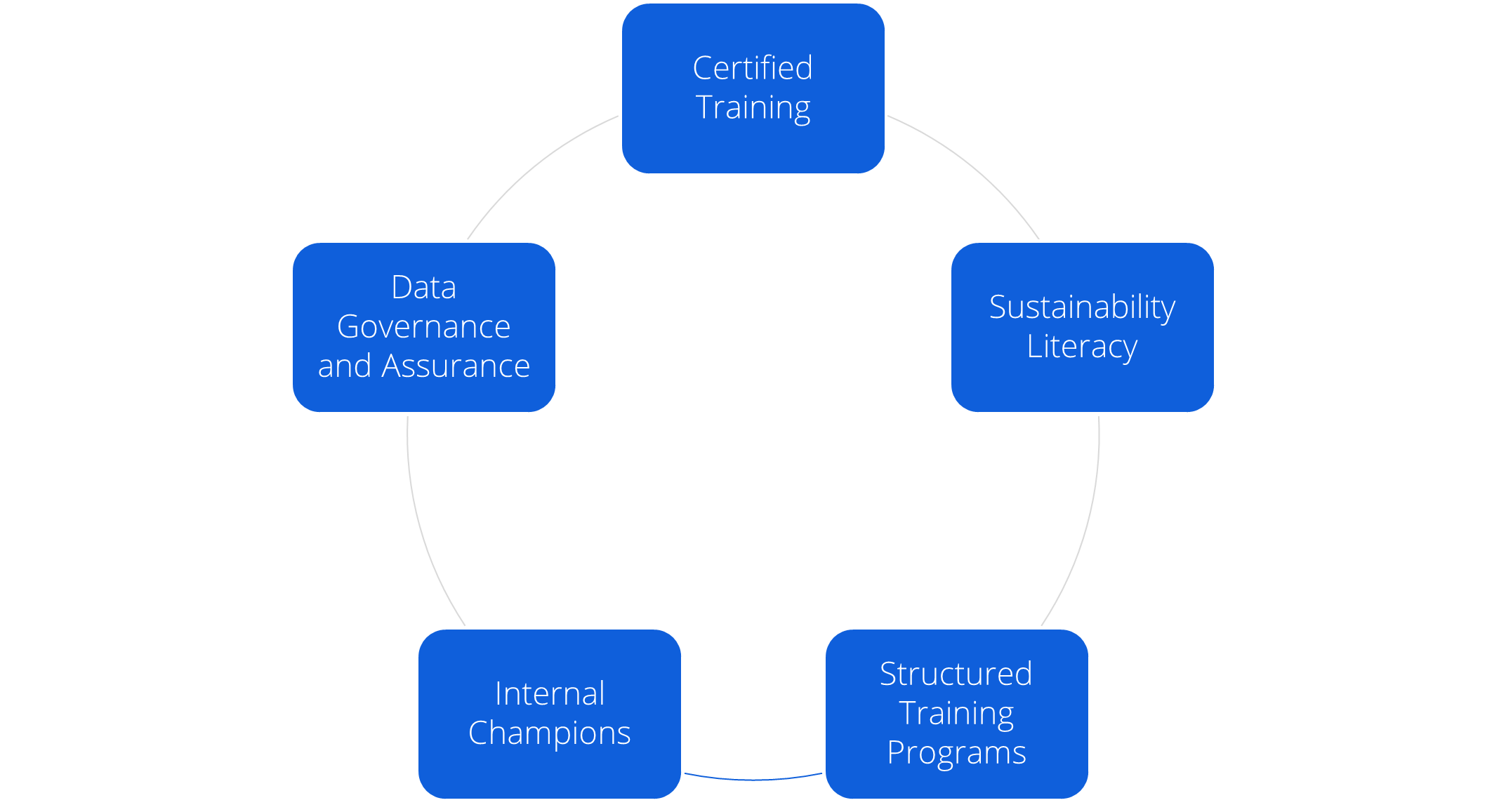
- Certified Training: Programs aligned with GRI and IFRS standards.
- Sustainability Literacy: Promoting ESG understanding across departments.
- Structured Training Programs: Focused sessions on climate risk, ERM integration, and reporting.
- Internal Champions: Developing ESG leaders within organizations.
- Data Governance and Assurance: Establishing robust systems for ESG data management.
Conclusion: A Call to Action
The Arab region is at a pivotal moment. With visionary leadership, robust regulations, and growing public awareness, the foundation for sustainable transformation is in place. Organizations must now focus on building capacity, aligning with GRI and IFRS standards, integrating sustainability into their operating models, and embedding ESG within ERM and governance structures.
Sustainability is not just about technology—it is about governance, profitable business models, assurance, and people. It is about meeting investor needs, addressing stakeholder trust, and preparing for the future, today.
Author: Waseem Hoeneini Ph.D – Managing Partner of WMSJ
WMSJ is a boutique advisory firm based in the MENA region and is distinguished as the first and only Arab firm to serve as an official supporter of the UN Sustainable Stock Exchanges Initiative.
As IFRS Sustainability Alliance Organization and Consultant Content Programme Member, GRI Community Member and Certified Training Partner. WMSJ is leading the charge focusing on strengthening disclosure quality, credibility, and investor confidence and committed to advancing capacity building across Arab communities, equipping them with the knowledge, skills, and leadership to design and implement impactful transition plans that drive growth and shape a thriving future for generations to come.
Events Calendar
Upcoming Events

BCCD Business Briefing: The Financial Landscape - Trust, Regulations and the Road Ahead, Sponsored by Canaccord Wealth
Tue, 13th Oct 2026
voco Dubai
As the wealth and investment landscape evolves, so does the expectation around regulation ... Read more

BCCD Masterclass - Clarity in Chaos: Navigating Leadership Decisions
Wed, 14th Oct 2026
Hotel Indigo Dubai Downtown
Join us for “Clarity in Chaos: Navigating Leadership Decisions”, an immersive, high-st... Read more

BCCD Breakfast Networking
Wed, 21st Oct 2026
Reform Social & Grill
Kickstart your morning with valuable connections & conversations. This casual yet engaging... Read more


