Closing the Loop in Grocery
Date Posted:Fri, 22nd Aug 2025

Kibsons’ sustainability system for resilient growth
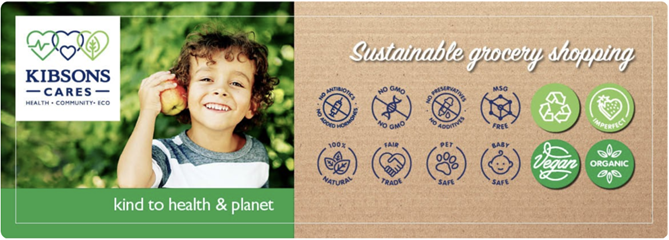
In the GCC, where freshness expectations are high and the cold chain is resource-intensive—ESG only works when it is engineered into the business, not bolted on.
At Kibsons, sustainability functions as an operating system: packaging is designed as a return loop, waste is prevented upstream with data, and utilities are run as circular resources. This integrated approach connects environmental outcomes to commercial value, guided by recognized frameworks including the UN Global Compact, COP28 dialogues, and the UAE’s Net Zero 2050 strategy.
Across the industry, three durable shifts are setting the pace:
- Packaging is becoming infrastructure, replacing expendables with returnable systems that operate across every route.
- Forecasting has become an ESG lever: AI connects procurement, picking, and promotions to real demand so spoilage is prevented at source.
- Utilities are going circular: renewable power, closed-loop water, and rapid composting reduce waste and emissions.
Kibsons mirrors these shifts under a single plan, pairing a crate-logistics loop with AI demand planning and site-level energy and water systems.

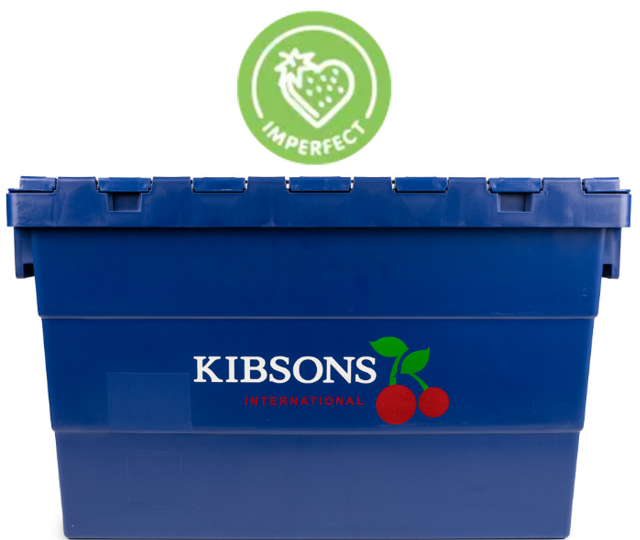
The packaging case study is straightforward and measurable. In November 2024, Kibsons began phasing out its familiar blue cardboard boxes in favor of robust, reusable crates that are delivered, collected, sanitized, and re-circulated. Because single-use box returns were low, the shift removes tens of thousands of disposable units each month and conserves more than 25,700 trees every year. The loop also improves doorstep experience and product protection, while giving operations a dependable, trackable asset rather than a consumable cost.
Waste is tackled upstream as a forecasting and merchandising challenge. AI-enabled demand planning cuts spoilage up to 50%. The weekly “Ugly but Tasty” range turns cosmetic imperfections into value, and daily donations redirect fit-for-use surplus to people—not landfill. These actions align with the UAE’s ne’ma initiative to halve food waste by 2030 and, critically, they move customers too: a 2024 survey shows 88% of customers prioritize sustainability and 70% report wasting less food since shopping with Kibsons.
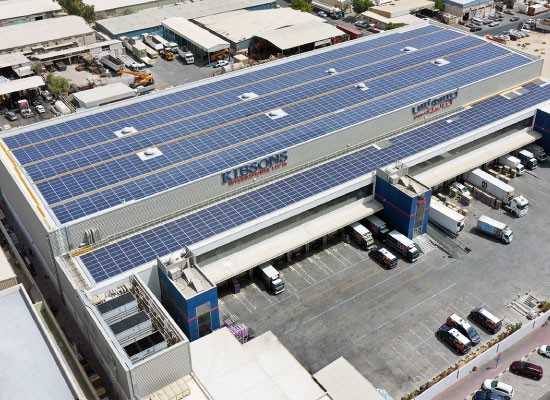
Kibsons’ cold-chain resources are tightly measured and managed. At its Ajman facility, a 997 kWp solar array currently supplies ~50% of site energy, with a long-term target to reach 100% solar coverage for operations. Cooling water is recycled at 75%+, saving ~1 million gallons annually. Unavoidable organics are converted into ~6 tons of compost per year, and >90% of plastic and paper are recycled. These are operational baselines with defined KPIs and they maintain product integrity while steadily shrinking the environmental load.
Partnerships and governance make progress durable. Internally, ESG responsibilities are embedded through staff training, SOPs, and cross-functional planning across procurement, operations, and delivery. Externally, suppliers collaborate on eco-certified sourcing and improved packaging, while customers receive transparent ESG updates and access to facility tours. Participation in national and global platforms—from UN Global Compact membership to COP28—keeps the roadmap aligned with policy direction and community expectations.
Against the backdrop of the UAE’s Net Zero 2050 pathway and national food-loss agenda, expectations are shifting towards verifiable action and transparent disclosure. And Kibson’s progress is tracked like business metrics, not slogans. The crate loop preserves ~25,700 trees each year. Predictive planning has delivered up to 50% spoilage reduction in targeted categories. Water initiatives save ~1 million gallons annually. Unavoidable organics become ~6 tons of compost, and >90% of plastic and paper are recycled. Commercial results move in step, with >85% customer retention and >99% delivery accuracy, demonstrating that sustainability and service quality reinforce one another at scale.
For BCCD members and UK–UAE partners, the takeaway is practical rather than prescriptive.
When ESG sits in the P&L and the route plan, reusable logistics lower packaging spend, smarter forecasting cuts inventory losses, and circular utilities hedge energy and water exposure.
Kibsons’ experience suggests the path to impact is not a single breakthrough; it is disciplined iteration—measured, reported, and delivered with customers, employees, suppliers, and regulators working in concert.
The result is a circular system that protects freshness, reduces risk, and builds resilience for the decade ahead.
Events Calendar
Upcoming Events

BCCD Business Briefing: The Financial Landscape - Trust, Regulations and the Road Ahead, Sponsored by Canaccord Wealth
Tue, 13th Oct 2026
voco Dubai
As the wealth and investment landscape evolves, so does the expectation around regulation ... Read more

BCCD Masterclass - Clarity in Chaos: Navigating Leadership Decisions
Wed, 14th Oct 2026
Hotel Indigo Dubai Downtown
Join us for “Clarity in Chaos: Navigating Leadership Decisions”, an immersive, high-st... Read more

BCCD Breakfast Networking
Wed, 21st Oct 2026
Reform Social & Grill
Kickstart your morning with valuable connections & conversations. This casual yet engaging... Read more


