The UAE’s Real Competitive Advantage Is Not Wealth. It Is Adaptability | By Dino Varkey, Group CEO, GEMS Education
Date Posted:Tue, 18th Aug 2026

Dino Varkey, Group CEO, GEMS Education, explains how the UAE’s resilience, adaptability, and long-term vision are enabling one of the world’s most advanced education systems to flourish.
Most countries slow down during periods of uncertainty. The UAE rarely does.
That instinct to move early rather than retreat has become one of the country’s defining economic characteristics and one of its greatest strategic advantages.
Over the past two decades, the UAE has developed a reputation not simply for ambition, but for operational agility. Whether confronting technological disruption, geopolitical instability, economic transition, or global crises, the country has consistently demonstrated an ability to adapt faster than many larger and more established economies.
That distinction matters.
In an era shaped by volatility, resilience is no longer measured solely by financial strength or infrastructure. It is measured by institutional agility, speed of decision making, and the ability to sustain confidence under pressure.
The UAE understands this unusually well.
At a time when many economies are becoming more cautious and inward looking, the UAE continues to invest aggressively in future facing sectors. Artificial intelligence, advanced computing infrastructure, clean energy, logistics, financial services, and education remain central to the country’s long-term strategy. The ambition is not merely diversification away from oil. It is to position the UAE as a global hub for talent, innovation, and intelligent capital.
Importantly, this is not theoretical policy ambition. It is being operationalized at speed.
The country’s expanding focus on agentic AI and advanced digital infrastructure reflects a broader recognition that competitiveness in the coming decades will depend on human capability enhanced by technology. The UAE’s leadership appears to understand that future economic power will belong not necessarily to the largest nations, but to the most adaptive ones.
That same adaptability has also shaped the country’s response during periods of regional uncertainty.
Earlier this year, amid wider geopolitical disruption, authorities coordinated the return of stranded residents and Golden Visa holders while maintaining continuity across critical sectors. The significance of this extended beyond logistics. It reinforced a broader perception increasingly shared by international investors and global families alike: the UAE is not simply stable during calm periods. It remains functional and forward moving during instability.
For years, the UAE was often described as a “safe haven” economy. Today, it is viewed as something more sophisticated: a resilient operating environment capable of maintaining continuity during disruption while continuing to plan long term.
That evolution has profound implications for education.
Education in the UAE is no longer treated solely as a social sector. It is increasingly understood as economic infrastructure.
As industries evolve more rapidly and technology reshapes the nature of work, national competitiveness will depend less on access to information and more on the quality, adaptability, and resilience of people. Technology may accelerate economies. Human capability sustains them.
This partly explains why the UAE has invested so heavily in building one of the world’s most diverse and internationally connected education ecosystems. Different curricula, educational philosophies, and learning models coexist within a framework that encourages innovation rather than rigid standardization.
That openness has become one of the country’s underappreciated strengths.
Parents across the UAE are no longer benchmarking schools purely against local alternatives – they compare them against the best global systems. Academic outcomes remain essential, but families are also looking for adaptability, innovation, digital fluency, wellbeing, entrepreneurial thinking, and stronger preparation for an economy shaped by continuous technological change.
In this sense, the evolution of education mirrors the evolution of the UAE itself.
The most effective schools today are not operating as static institutions designed solely around examinations. They are becoming adaptive learning ecosystems where technology enhances teaching, educators remain central, and students are prepared not only for university, but for lifelong reinvention.
This became especially visible during the pandemic and more recent regional disruption. Schools across the UAE rapidly adopted hybrid and distance learning models with remarkable continuity. What stood out was not simply the speed of execution, but the degree of alignment across government, institutions, educators, and families around a shared national priority: ensuring learning continued despite uncertainty.
That level of coordination is difficult to replicate without institutional trust.
At GEMS Education, we see these shifts reflected daily in the expectations of parents and students. Families expect education systems that combine academic rigor with innovation, character development, entrepreneurship, wellbeing, and future readiness. They are looking not simply for schools with strong heritage, but for schools aligned with the realities of the future economy.
Ultimately, what distinguishes the UAE is not simply the scale of its ambition. Many nations are ambitious.
The difference lies in execution, adaptability, and time horizon.
This is a country simultaneously responding to the demands of today while planning deliberately for the next half century. Few systems manage both effectively.
The economies that will lead the coming decades are unlikely to be defined by size alone. Increasingly, they will be defined by their capacity to adapt under pressure without losing strategic direction.
The UAE appears to understand that earlier than most.
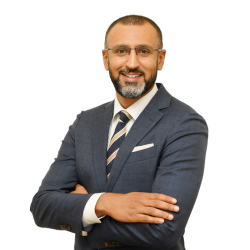
Author: Dino Varkey, Group CEO, GEMS Education
Events Calendar
Upcoming Events

BCCD Business Briefing: The Financial Landscape - Trust, Regulations and the Road Ahead, Sponsored by Canaccord Wealth
Tue, 13th Oct 2026
voco Dubai
As the wealth and investment landscape evolves, so does the expectation around regulation ... Read more

BCCD Masterclass - Clarity in Chaos: Navigating Leadership Decisions
Wed, 14th Oct 2026
Hotel Indigo Dubai Downtown
Join us for “Clarity in Chaos: Navigating Leadership Decisions”, an immersive, high-st... Read more

BCCD Breakfast Networking
Wed, 21st Oct 2026
Reform Social & Grill
Kickstart your morning with valuable connections & conversations. This casual yet engaging... Read more


