How Engineering Know-How, Digital Intelligence, and Energy Expertise Come Together at ENGIE Solutions
Date Posted:Sun, 22nd Nov 2026

ENGIE Solutions’ Graham Easton, Youssef Amro and Mohammed Suhail discuss combining engineering expertise, integrated facilities management, energy efficiency and digital technology to meet the region’s changing operational needs.

How can a smart building that appears to be doing everything right still be getting so much wrong? Maintenance targets are met, faults resolved promptly, and dashboards glow green, yet energy bills continue to rise, operating costs mount, and expensive equipment deteriorates prematurely. The problem likely lies in a narrow definition of what facilities management should deliver.
That definition is beginning to change as cities in the region embrace smarter buildings, artificial intelligence and connected technologies. Asset owners are now looking beyond maintenance targets to demand tangible results in the form of lower operating costs, longer asset life, greater reliability and better overall performance.
These changing expectations are reshaping how clients select their FM partners. “Clients in this region have become very sophisticated buyers,” says Graham Easton, Managing Director, IFM GCC and General Manager, UAE at ENGIE Solutions.
“Rather than a traditional approach like comparing rates for field operators, staff or operations, they want to know who will take responsibility for how their asset performs, how much energy it uses, how long it lasts and how safely the work gets done.”
To meet these expectations, FM providers like ENGIE Solutions are now improving building performance by identifying inefficiencies, predicting equipment health performance to anticipate breakdowns, managing energy use, understanding pattern in asset data, and making informed decisions throughout an asset’s life. The stakes are rising as the Middle East’s built environment expands. Airports, transport networks, hospitals, data centres, universities and commercial developments are becoming more demanding to manage, while ageing facilities require greater attention to maintenance, refurbishment and equipment replacement.
ENGIE Solutions Middle East draws on its expertise in engineering, integrated FM, energy management and specialist technical services to meet these expectations. With more than 3,000 employees across the GCC, the company serves a diverse portfolio of sectors, including industrial facilities, energy and utilities, transportation, airports, data centres, healthcare, education, research, commercial real estate and mixed-use communities.
Engineering-led facilities management
Engineering expertise is at the heart of ENGIE Solutions’ approach to facilities management.
While traditional services such as mechanical and electrical maintenance, cleaning and general upkeep remain essential, modern infrastructure demands a deeper understanding of how building systems operate and interact.
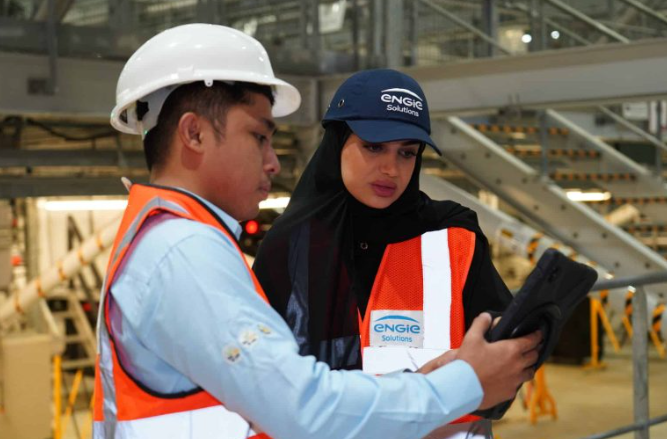
Specialist systems require teams who understand their operating limits and potential failure points.
Maintaining the reliability of cooling plants, high-voltage electrical networks, smart automation systems and specialist equipment requires identifying potential problems before they disrupt operations.
ENGIE Solutions’ engineering background and technical approach to integrated facilities management, including hygiene services, allow it to manage these requirements across a wide range of environments.
At the University of Artificial Intelligence in Abu Dhabi, for instance, ENGIE Solutions maintains cleanrooms, ultra-pure water systems, process chilled water, liquid nitrogen systems and specialist laboratory ventilation.
These systems require precise control of temperature, air quality and other operating conditions to support sensitive research activities. The company also installed carbon filters that reduced total volatile organic compounds (TVOCs) by 44%, bringing levels in line with the thresholds required for LEED Platinum certification in educational facilities and creating a more comfortable indoor environment.
In Dubai, the company upgraded a cleanroom at a space centre facility from ISO Class 8 to Class 7 without interrupting operations. The assignment required technical planning and precise execution to improve the facility’s operating conditions while allowing essential activities to continue.
Such projects demonstrate why engineering knowledge matters in facilities management and how it intersects with hygiene, indoor air quality and BICSc standards. Maintaining specialist equipment requires an understanding of its purpose, operating limits and potential failure points.

(L to R): Youssef Amro, Graham Easton, and Mohammed Suhail are driving ENGIE Solutions’ approach to engineering-led facilities management in the Middle East
Easton believes this changes how FM providers approach their responsibilities. “An engineering mindset changes the questions you ask,” he says. “A conventional provider focuses on completing the maintenance schedule. An engineering-led partner looks deeper by examining why an asset is performing the way it does, what it will require over the next five years, and how its performance can be improved today,” he further adds.
The distinction is particularly important as buildings age. Asset owners must decide when equipment should be repaired, upgraded, or replaced. Replacing machinery prematurely can waste capital, while delaying necessary investment can increase maintenance costs and the risk of failure.
Integration beyond the contract
Engineering alone is not enough if building services operate in isolation. A contractor may meet every maintenance target while energy use remains excessive, or separate teams may miss recurring faults because their records are disconnected.
ENGIE Solutions brings maintenance, cleaning and other specialist services, energy management, safety and asset information into a coordinated operation. At a sustainable city in Abu Dhabi, the company has managed more than 44,000 assets under a 10-year agreement covering commercial and residential buildings, supporting infrastructure and 27 kilometres of roadways. The contract has been governed by 64 performance indicators.

ENGIE Solutions is moving beyond traditional maintenance to take greater responsibility for how assets perform, how much energy they use and how long they last
Over five years, electricity and chilled-water consumption fell by 32%, while water consumption declined by 21%. The operation also obtained ISO 50001 energy management certification and three LEED O+M Gold certifications.
As Easton explains: “Integration is about having one operational logic. When the people maintaining the chillers, the people managing energy, and the people responsible for safety work from the same information towards the same goals, the asset starts to behave differently.”
This alignment is particularly important in long-term contracts, where maintenance, energy management and investment decisions shape an asset’s performance and operating costs for years to come.
Keeping critical infrastructure running
Transport networks and urban infrastructure rely on interconnected systems that must operate safely and reliably around the clock. Even minor faults can disrupt essential services, making effective coordination and operational continuity planning critical.
ENGIE Solutions’ experience in managing such infrastructure is demonstrated by its work on Dubai Tram, where maintaining complex systems requires careful coordination. The company’s 13-year contract covers facilities and infrastructure across an 11-kilometre network, including 11 stations, four footbridges, a technical building and a nine-building depot complex.
The scope includes approximately 9,000 mechanical, electrical and plumbing assets and 16,000 control-system points. Responsibilities extend from cooling, fire protection, lifts and escalators to depot equipment and elements of civil and structural maintenance. Maintaining these assets requires coordination with the transport operator to ensure that technical interventions do not compromise passenger safety or service continuity.

Maintaining critical facilities requires precise planning to protect service continuity
“Unlike a conventional office building, a transport network offers limited opportunities to take equipment out of service,” says Easton. “Maintenance must often be planned around operating schedules, with specialist teams working within tightly controlled access periods.”
Similar demands have been witnessed in aviation. At one of the UAE’s international airports, ENGIE Solutions managed technical services covering approximately 45 buildings and more than 35,000 assets, including passenger boarding bridges and specialist support for baggage-handling systems.
At the airport’s utility plants, the company’s scope included 17 high-voltage substations, substantial water storage, potable and fire-water networks and emergency standby generation. The company met contractual performance indicators for more than 36 consecutive months without interrupting required terminal services.
ENGIE Solutions has also managed pumping stations, electrical substations and utility networks on Yas Island, supporting major attractions, hotels and events at Yas Marina.
Its work also extends to Abu Dhabi’s Noor 2 street lighting programme, where it maintains 133,473 LED luminaires under a public-private partnership.
The geographically dispersed network requires coordinated fault response, field maintenance and safety management. The upgrade will reduce electricity consumption by approximately 74%, with projected savings of nearly 2.4 billion kilowatt-hours over the concession period.
“All these projects show just how much more is expected of FM providers as infrastructure grows and becomes more sophisticated,” says Easton.
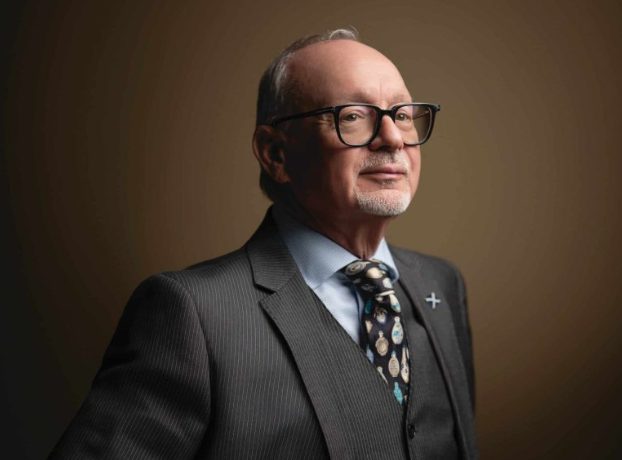
Graham Easton, Managing Director, IFM GCC and General Manager, UAE
“Asset owners want more than someone who can maintain their buildings and equipment. They want a partner who can keep critical systems running, avoid disruptions and enable their assets to perform better over the long term.”
Graham Easton, Managing Director, IFM GCC and General Manager, UAE
Data centres raise the stakes
The rapid expansion of the Middle East’s digital economy is creating another important opportunity for specialist FM. Data centres have become essential infrastructure for governments, businesses and digital services. Growing demand for cloud computing, data processing and artificial intelligence is driving investment in facilities with increasingly demanding power and cooling requirements.
For FM providers, these developments present challenges that differ from conventional commercial buildings. Data centres must maintain strict operating conditions, with reliable power supplies, effective cooling and backup systems capable of responding immediately when required.
Even relatively minor technical failures can have significant consequences.
ENGIE Solutions has developed experience in managing data-centre facilities, reporting 100% equipment availability, no power outages or downtime, and full compliance with contractual service requirements over the contract period.
At a data-centre facility in Dubai, an operational improvement programme involved equipment assessments, revised procedures, digital maintenance tracking and cooling-system adjustments.
The facility recorded more than 12 months without a critical incident, reduced monthly power and cooling consumption by 18% and cut reactive maintenance workloads by 25%. Predictive maintenance adherence also rose above 95%.
“Good monitoring helps us spot problems before equipment fails, but it also shows us where systems are using more energy than they should,” says Mohammed Suhail, Digital Transformation & AI Manager of Technology and Innovation at ENGIE Solutions. “That allows us to make adjustments, reduce unnecessary strain on equipment and keep everything running efficiently.”
The market’s growth creates opportunities but also raises the bar. “We have to keep investing in specialist skills, better digital tools and consistent operating procedures to deliver the reliability these facilities demand,” Suhail adds.
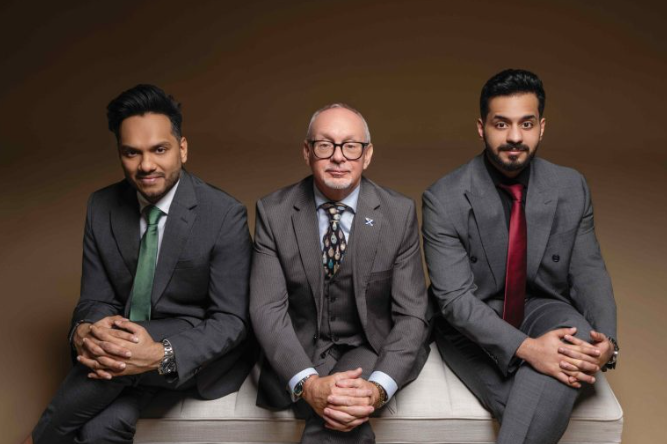
ENGIE Solutions’ team works across disciplines to address the increasingly complex demands of the region’s built environment
Different sectors, different demands
The same engineering and digital capabilities must be adapted to very different operating environments. Hospitals require uninterrupted technical services, schools and universities must work around teaching schedules, and commercial buildings need to balance occupant comfort with operating costs.
In healthcare, ENGIE Solutions manages electrical systems, building controls, and cooling at Danat Al Emarat Hospital in Abu Dhabi, where it has reported 100% chiller availability and improvements in water management. Its healthcare experience also includes Al Qassimi Women’s and Children’s Hospital in Sharjah and facilities in Saudi Arabia.
At Al Qassimi Women’s and Children’s Hospital, the company replaced 10 legacy chillers with high-efficiency models to improve reliability and energy performance. Integrating the new equipment to its Smart O&M platform through a SmartBox gateway provided real-time operating data and allowed software-based rules to identify performance issues and improve efficiency.
ENGIE Solutions also launched a data-science initiative at the site, using statistical methods and moving averages to generate predictive insights. These measures delivered more than 2.2 million kilowatt-hours in electricity savings. A similar approach is being introduced at Danat Al Emarat Hospital, where IoT monitoring and business-rule alerts are laying the groundwork for data-science and artificial-intelligence applications.
In education, the company’s portfolio includes campuses in Abu Dhabi and Dubai. At Lycée Français International Georges Pompidou, ENGIE Solutions provides advanced hard facilities management services across the Academic City and Oud Metha campuses, using its digital platform and technical expertise to support reliable, energy-efficient operations while limiting disruption to teaching and learning.
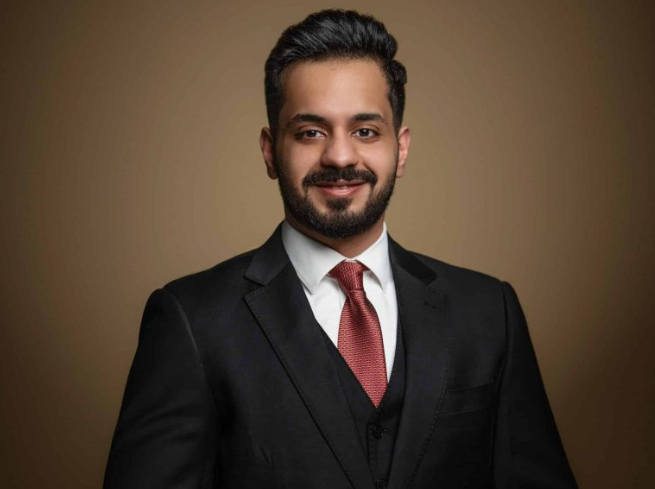
Youssef Amro, UAE Energy Manager
The technology still depends on human judgement.
“Digital tools can tell us when something is wrong, but we still need experienced engineers to understand why it is happening and what to do about it.”
Mohammed Suhail, Digital Transformation & AI Manager, Technology and Innovation
As predictive maintenance spreads, technical expertise will determine how effectively its warnings are used.
People and safety
Despite the progress made in technology, facilities management remains a people-intensive business, requiring skilled teams to maintain complex infrastructure safely and reliably.
ENGIE Solutions places strong emphasis on human intelligence, workforce training, supervision and safety. Its ‘No Life at Risk’ programme promotes risk assessment, safety leadership and employees’ authority to stop unsafe work. This commitment is reflected in the company’s record of more than 20 million incident-free working hours at its regional operations.
“You cannot deliver reliable services without putting safety first,” Amro points out. “Everyone needs to understand the risks and know when to stop a job if something is not right.”
Alongside safety, developing specialist skills is now a key priority as infrastructure grows more sophisticated and technology changes how facilities are managed. As Suhail explains, “Technology is changing the way we work, but we need expert people who understand these systems. That is why we continue to invest in developing our teams to meet the changing needs of our clients.”
Building on progress
The future direction of the Middle East’s FM industry will be shaped by the need to manage increasingly sophisticated infrastructure while extending the useful life of existing assets. Both will require greater investment in specialist skills, technology and long-term partnerships.
For ENGIE Solutions, nearly two decades of regional experience have established a strong foundation from which to expand its operations and respond to emerging market opportunities.
“The question clients ask us has changed,” says Easton. “It used to be whether we could maintain their buildings. Now it is whether we can help them run their operations better for the next 20 years.”
Source: Facilities Management Middle East
Click here to read the original article.
Events Calendar
Upcoming Events

BCCD Hosts - InterCouncil Networking
Tue, 24th Nov 2026
Embassy Suites by Hilton Dubai Business Bay
Celebrating international business relations, connectivity and diversity, join Dubai-based... Read more

BCCD Business Briefing: Building What Comes Next - Construction and Supply Chain in the UAE Sponsored by Dentons
Thu, 26th Nov 2026
Embassy Suites by Hilton Dubai Business Bay
Our flagship BCCD Business Briefing on Construction returns with a focus on regional devel... Read more

Member Spotlight Networking
Thu, 26th Nov 2026
Five Iron Golf - Business Bay
Join us for our monthly networking event celebrating SMEs in Dubai and the UAE. Connect wi... Read more


