Why Yachting Can’t Borrow Its Green Playbook
Date Posted:Tue, 20th Oct 2026

Why sustainability in yachting looks nothing like it does in other industries, and what an honest operator in Dubai can actually do about it.
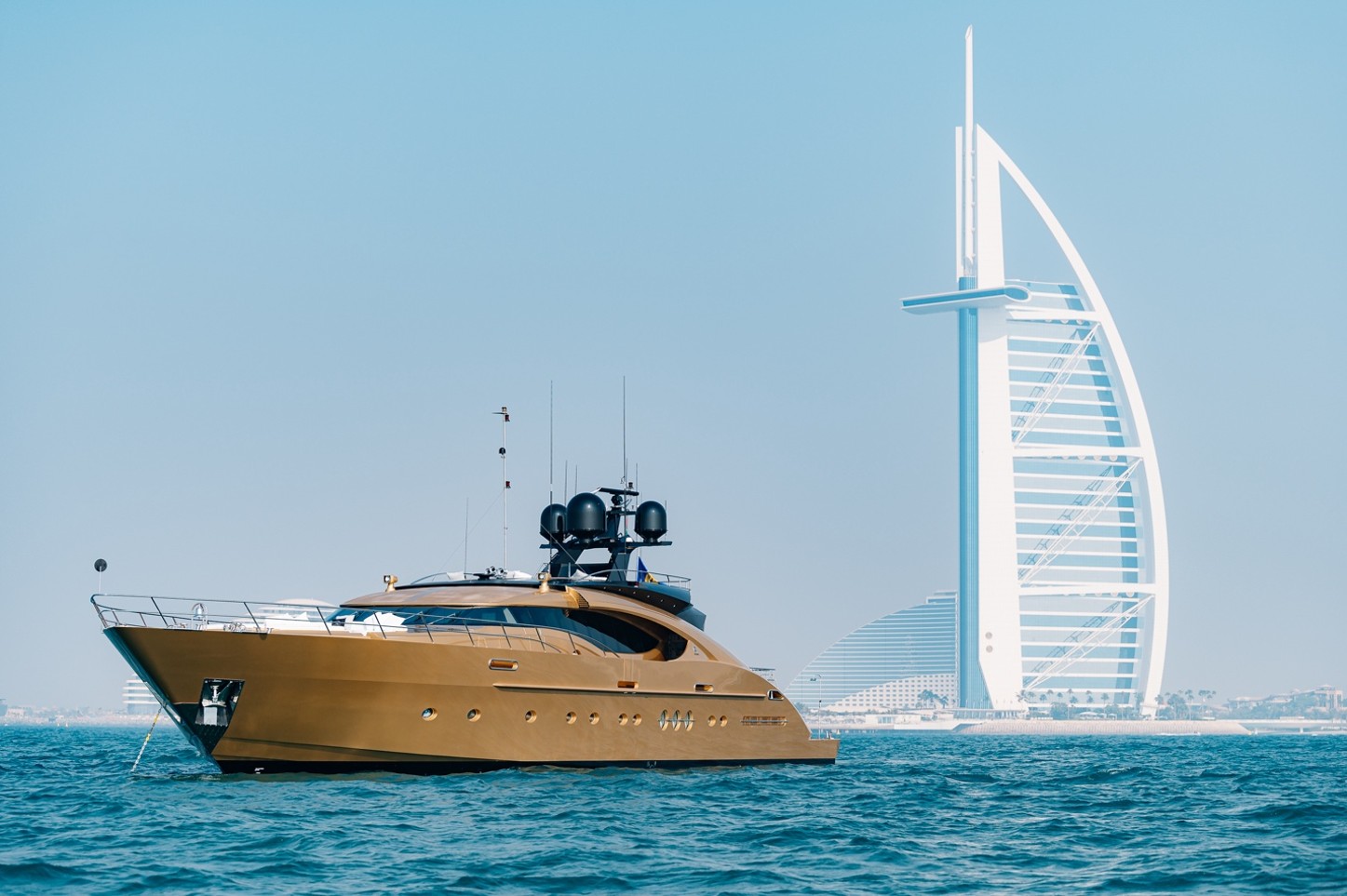
Ask most people in our industry about sustainability and the conversation goes straight to the engine room. Hybrid propulsion, hydrogen concepts, and electric tenders on the stand at the international boat show.
It is the wrong place to start. The most important fact about a yacht's environmental footprint is not how it moves. It is how much of its life it spends not moving at all.
Yachting's green conversation has been borrowed, almost wholesale, from other industries. It does not fit. What follows is what I believe does.
Let's start with the number nobody likes
Anthropologists Richard Wilk and Beatriz Barros estimated that a large superyacht with a permanent crew, helipad, submarines and pools emits about 7,020 tonnes of CO2 a year, making it by far the most polluting asset in their study of billionaires' footprints. Few Dubai charter yachts approach that scale, but the figure is so high because a yacht never truly switches off.
Our industry's reflex is to dispute the methodology or change the subject. I would rather start there. Many people reading this are responsible for ESG reporting in their own businesses, and they already know the number.
A yacht company that opens a sustainability conversation with a brochure, and a hybrid badge loses the room in the first paragraph. Credibility in this sector begins with admitting what the product is.
Why the corporate playbook does not fit
Most industries measure sustainability per unit of output: emissions per tonne shipped, per room night, per kilometre flown. Yachting has no tidy unit. A guest is not buying distance. They are buying an afternoon, a view, a sense of space.
That is why the standard toolkit translates so badly. Paper straws and reusable bottles are good practice, but in Dubai they are no longer a differentiator. The emirate's single-use plastics ban reached its final phase on 1 January 2026, adding plastic cups, lids, plates and cutlery to the straws and stirrers banned a year earlier. What was once marketing is now simply compliance.
Carbon offsets have the opposite problem: they let an operator buy a claim without changing a single operating decision. And hybrid systems, the industry's favourite symbol, deliver nothing if the crew leave them switched off because the diesel generator is simpler. A green feature that is not used is not a green feature. It is a sales line. A yacht is a hotel that occasionally moves
Water Revolution Foundation, a non-profit created within the superyacht industry, used vessel tracking data to build a typical operating profile for large yachts. The answer now underpins a new international technical specification, ISO TS 23099: roughly 10 per cent of the time cruising, 34 per cent at anchor and 56 per cent in port.
That profile is fundamentally different from commercial shipping, and it changes where the effort should go. The Dutch superyacht builder, Heesen, reached the same conclusion from the engineering side. It calculated that around half of a yacht's total emissions come from the generators and the hotel load: lighting, galley, water makers and, above all, climate control.
In the Gulf, that last item is the whole story. For much of the year, a yacht in Dubai is an air-conditioned room floating in warm water. Anyone who has walked the pontoons on a summer afternoon has heard generators cooling empty saloons, so they feel perfect when guests arrive hours later.
The fixes are not glamorous, which is exactly why they are overlooked:
- Plug in. Major Gulf marinas, including Mina Rashid, Dubai Harbour and Abu Dhabi's Yas Marina, offer shore power at the berth, with the largest supplies rated at 1,000 amps or more. A yacht cooled from the berth is not burning diesel on board to do it.
- Cool by schedule, not habit. Some large yachts now run separate climate settings for guests aboard, crew only, and nobody aboard. Every charter yacht could do the same.
- Shade before you chill. Awnings, closed doors and tinted glazing at anchor cut the load the generator has to carry.
- Manage the generator, not just the engines. A generator running far below its efficient load burns fuel for very little return.
The prize is large. The same foundation estimates that heat recovery and air-conditioning upgrades can cut a yacht's energy demand by more than 40 per cent. The sailing-yacht builder Southern Wind reckons that better shade, ventilation and reflective deck coatings could save as much fuel as a hybrid drive.
The throttle is the cheapest technology we have
For a yacht, fuel burn does not rise in a straight line with speed. As a working rule, cutting cruising speed by 10 per cent reduces fuel consumption by roughly a fifth to a quarter, depending on the hull.
Now consider the typical Dubai charter. Two to four hours, a fixed list of landmarks, and a captain under pressure to fit them all in. The result is a yacht running hard between photo stops, then idling at anchor with the air conditioning on full.
The answer is not a new yacht. It is a new itinerary: fewer landmarks, longer at anchor, a calmer passage between them. Guests rarely notice two knots. They always notice a rushed afternoon. The most sustainable charter and the best charter are, more often than not, the same charter.
The greenest yacht is usually the one already built
Yachts last. Southern Wind's life-cycle assessment assumed a 30-year service life and noted that every yacht in the yard had built over three decades was still in use. Even for its sailing yachts, energy used across that operating life made up 63 per cent of the total footprint. For a motor yacht, the operational share is far higher.
Two conclusions follow. First, the industry's fixation on launch-day innovation is misplaced: most of the fleet that will be on the water in 2040 is already afloat. Second, meaningful work happens at refit and in daily operation, through modern generators, better energy management, and cleaner fuel.
On fuel, the most practical option today is hydrotreated vegetable oil, or HVO. It is a drop-in replacement for marine diesel; it can be blended in any proportion, and industry figures put its well-to-wake carbon savings at 60 to 90 per cent, depending on the feedstock. One captain running a 44-metre yacht on HVO reported paying around 18 per cent more than for conventional gasoil, a premium that barely registers against the total cost of a charter.
The barriers are availability and habit, not engineering. Dubai has made a start: since January 2026, Dubai Marina Yacht Club and Creek Marina Yacht Club have offered a biodiesel blend made from the city's used cooking oil. It is not HVO, and its blend and carbon savings have not been published, but it shows a local supply chain can be built. The next step is fuel that is certified with published savings.
The case for charter, made honestly
There is an argument our industry rarely makes, though it is a strong one. Most private yachts spend the greater part of the year without their owners aboard, yet they are crewed, maintained and climate-controlled all year round. So, much of the footprint is fixed whether anyone is aboard or not.
Charter spreads that fixed footprint across far more people and far more days. In that sense, charter is yachting's version of the sharing economy: more experiences from fewer hulls. A city that meets demand through a well-used charter fleet needs fewer yachts sitting idle in its marinas.
But the argument only holds if the charter fleet is run well. A busy yacht run carelessly is worse, not better. High utilisation is a reason to be efficient, never an excuse not to be.
The sea is the product
Every yacht company in this city sells the same thing: the Gulf. Its water, its marine life, its coastline. Protecting it is not philanthropy. It is maintenance of the product.
Dubai is investing seriously here. The Dubai Reef project is deploying 20,000 artificial reef modules across 600 square kilometres of the emirate's waters by 2027. Early surveys at its test site recorded more fish across 15 native species and an eightfold increase in fish biomass, and Dubai Chambers is among its partners.
Some of this is already law. Dubai's vessel licensing rules ban vessels from discharging oil, sewage or waste into the emirate's waters, and allow anchoring only in designated areas. Under MARPOL Annex V, the IMO prohibits almost all garbage discharge from ships; yachts included and lists the Gulf among its special areas. Using the marina pump-out is the legal floor and should never be marketed as more.
Beyond the floor, operators can play a modest but real part:
- Within designated anchorages, drop anchor on sand, well clear of reef structures.
- Brief guests on the marine environment before they swim.
- Commit a fixed share of revenue to local marine conservation. The Water Revolution Foundation suggests 0.3 to 0.5 per cent of a yacht's annual operating budget, a figure any well-run operator can afford.
The rules have already arrived
For years, yachting assumed regulation would come from the IMO, slowly. Globally, that is still partly true: adoption of the IMO Net-Zero Framework was adjourned in October 2025, and member states may only return to it in December. Even then, it would apply only to ships above 5,000 gross tonnes, which leaves all but the very largest yachts.
Here, the rules are already in force. The UAE's Federal Decree-Law No. 11 of 2024 on the Reduction of Climate Change Effects took effect on 30 May 2025. It applies to private companies regardless of size, on the mainland and in free zones alike. Businesses must measure and report their Scope 1 and Scope 2 emissions; the first reporting deadline fell on 30 May 2026, and fines run from AED 50,000 to AED 2 million.
The scrutiny will only grow with the fleet. The Dubai Maritime Authority recorded 97 foreign-flagged yacht arrivals in the first half of 2025, up 149 per cent on a year earlier, with the berths under its oversight reaching 4,190.
The part our industry has not yet absorbed is Scope 3, which advisers widely expect to become mandatory from 2027, although the law does not yet confirm it. When it does, the companies that book yachts for team events and client entertainment will need emissions figures for those charters. The operator who can supply a credible number per charter will win that business. The one who cannot will quietly fall off the supplier list.
The tools are finally there. Water Revolution Foundation's Yacht Environmental Transparency Index (YETI), and the ISO specification built on it, give yachts over 30 metres a common benchmark. Smaller charter yachts can start simpler: fuel logged, engine and generator hours logged; guests logged.
Five habits for every operator in this city
None of this needs a new yacht or a press release. It needs five habits:
- Measure per charter hour. Dubai already requires licensed charter companies to record every journey and hand that record to the regulator on request. Adding fuel, generator hours and guest numbers to that log costs almost nothing. You cannot reduce what you do not record, and soon you will be asked for it.
- Make shore power the default. No generator running at the berth without a documented reason.
- Build speed into the itinerary. Plan routes around time at anchor, not landmarks ticked off.
- Trial HVO. Run one vessel on it for a season and share what you learn.
- Publish the numbers. Imperfect data, honestly presented, is worth more than any green label.
Sustainability in yachting will never look like it does in a factory or an office tower. It will not be a paper straw or a solar panel in the brochure.
It will look like a yacht plugged in at the berth, a slower passage past the Burj Al Arab, a longer swim at anchor, and a logbook that could survive an audit. That is less glamorous than a hydrogen concept at a boat show. It is also the version that is real.
Host Your Next Event on the Water with Exclusive BCCD Savings
Planning a client event, team day, corporate charter, or private evening in Dubai? Let us help you design a more conscious, well-considered experience on the water.
As a proud BCCD member, you get 10% off our Gold and Platinum tier charters. To redeem this exclusive benefit, simply use the code ZY-BCCD-26 when booking.
Terms: Valid until March 2027. Minimum 2-hour booking is required. Cannot be combined with other offers.
Author: Aaliyan Sheikh, Director of Business Development, Ziyana Yachts
Email: [email protected]
WhatsApp: +971 50 712 2707
Web: www.ziyanayachts.com
Events Calendar
Upcoming Events

BCCD Breakfast Networking
Wed, 21st Oct 2026
Reform Social & Grill
Kickstart your morning with valuable connections & conversations. This casual yet engaging... Read more

Quick Connect: Meet, Greet, Repeat!
Thu, 22nd Oct 2026
Pronto, Fairmont Dubai
Join us for an exciting evening of speed networking that’s all about making new connecti... Read more

Breast Cancer Awareness Morning
Tue, 27th Oct 2026
SEE Institute
October is Breast Cancer Awareness Month, a time to bring a difficult subject into the ope... Read more


