AI Is Moving Faster Than Governance & Healthcare Leaders Know
Date Posted:Tue, 16th Jun 2026

On Monday 8th June 2026, Goaco supported the British Chamber of Commerce Dubai (BCCD) in hosting a roundtable discussion with healthcare leaders from across the UAE. The session tackled a topic that is becoming increasingly difficult to ignore: safeguarding patient data in an AI-driven healthcare environment.
The discussion was guided by Steve Killick, Goaco’s Senior Consultant (Product Delivery) and a healthcare technology leader with over 16 years of experience across the NHS, private healthcare technology providers, and international healthcare markets. Steve previously served as the Associate Director at Surrey and Borders Partnership NHS Foundation Trust, where he led innovation initiatives and Electronic Patient Record (SystmOne) improvements.
Throughout his career, he has focused on user-centred design and the practical application of technology to improve experiences for patients, clinicians, and operational teams. His digital transformation experience spans patient engagement, electronic patient records, interoperability, cyber security, virtual care, and operational improvement. Today, he continues to work with healthcare leaders across the UK, UAE, and Saudi Arabia to navigate the opportunities and challenges of emerging technologies, including AI.
Over the past 16+ years, Steve has witnessed several waves of digital transformation come and go:
- Electronic Patient Records
- Patient Portals
- Mobile Apps
- Remote Monitoring
- Interoperability Programmes
- Population Health Management
- Cyber Security and Resilience Programmes
- Virtual Wards
- Hospital Command Centres
Each of these waves arrived with predictions that it would fundamentally reshape healthcare. Now, it is AI's turn. Every one of these past innovations promised transformation; some succeeded brilliantly, while others became expensive lessons in what happens when technology is implemented faster than organisations are ready for it.
What struck Steve most from the webinar was not excitement about AI, but rather a profound concern regarding governance.
One clear theme: the guardrails are lagging
During the session, participants were asked a simple question:
"Is AI adoption in healthcare moving faster than governance?"
The overwhelming response was yes. Comments from the UAE healthcare leaders included:
- "AI products and solutions are coming out faster than policy exists for them."
- "Governance is very slow and risks impacting AI adoption."
- "AI is moving faster than data governance and cyber assurance. This is the risk."
Interestingly, nobody argued against AI itself, suggested halting its use, or wanted to put the brakes on innovation. The core concern was that organisations are accelerating deployment faster than they are building the necessary guardrails.
This feedback strongly resonated with Steve's experience. Throughout his career, whether working within the NHS or supporting healthcare organisations through digital transformation, he has seen firsthand how vital data governance and ethics are to building trust. The challenge is rarely the technology itself; it is ensuring that data is used responsibly, transparently, and in ways that patients, clinicians, and regulators can understand and support. This reality should give all healthcare leaders pause for thought.
Audience Poll Results
To capture real-time feedback during the session, Goaco used Mentimeter to gather participant views and opinions. The live polling provided a valuable snapshot of how healthcare leaders currently perceive AI adoption, governance, risk, and patient trust.
What was particularly striking was the consistency of responses across organisations. Regardless of size or maturity, many participants shared similar concerns around governance, accountability, and the pace of AI innovation.
Some of the questions asked included:
- Is AI adoption in healthcare moving faster than governance?
- Where do you believe the greatest risk currently sits?
- Would you trust AI to make recommendations about your own healthcare?
- Has AI become a board-level conversation in your organization yet?
- Who should ultimately be accountable for AI-driven decisions in healthcare?
The results reinforced a key message: healthcare leaders are not resisting AI. Instead, they are asking for clearer frameworks, stronger governance, and greater confidence that innovation can be adopted safely.
Governance seen as a bigger risk than technology
One specific poll result genuinely surprised Steve. When asked where the biggest risk currently sits, participants ranked the options in the following order:
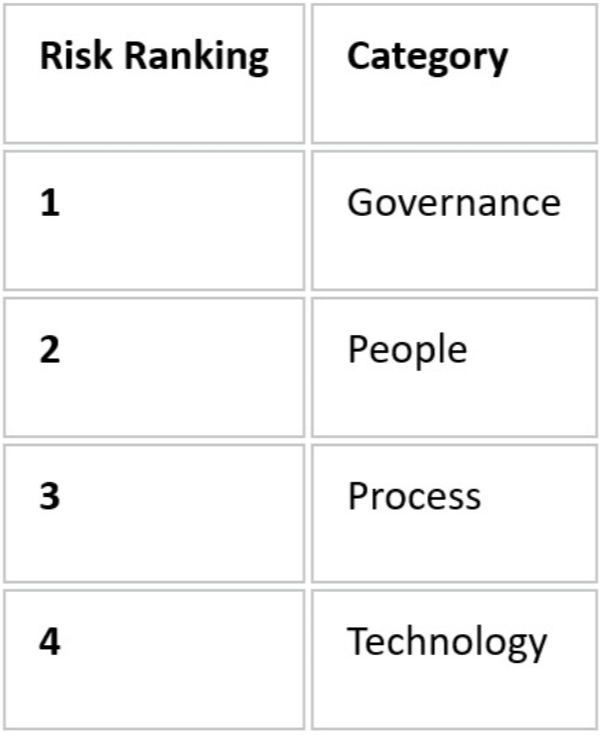
Technology came last.
While the industry spends huge amounts of time discussing AI models, cybersecurity platforms, cloud architecture, and infrastructure, the people responsible for delivering healthcare services see governance as the greatest risk. Steve strongly agrees with this assessment. Most major incidents he has encountered during his career were not caused by sophisticated technology failures.
They were caused by:
- Unclear ownership
- Poor decision making
- Insufficient training
- Organisations rushing to implement technology without fully understanding the consequences or the baseline problem statement
The technology is often the easy part; the human side is much harder.
Steve observed this dynamic years ago while working on patient engagement systems used by hospitals across the UK and Middle East. The technology itself was not usually the challenge. The real hurdle was aligning clinicians, operational teams, governance leads, IT departments, and executives around a common goal. The organisations that succeeded were not necessarily the most technologically advanced; they were the ones with clear leadership, strong governance, and a willingness to engage users from the very beginning.
In contrast, Steve has seen hospitals spend millions on technology and still struggle to achieve meaningful adoption. One project he frequently recalls was the deployment of a bed flow management system. The technology was sound, but without sufficient engagement from operational teams and clear ownership of the associated processes, the expected benefits never fully materialised. Conversely, he has seen relatively simple solutions, such as Microsoft Power Apps, deliver significant improvements in efficiency and patient care because the people, processes, and governance were aligned from the outset.
AI is organisational change, not a product
One participant made a comment that summarised the situation perfectly:
"AI isn't something you buy off the shelf. It's an organisational transformation."
Too many organisations are still approaching AI like previous software procurements: buy the product, install it, train the staff, and consider the job done.
That is not how AI works. AI impacts multiple facets of an organisation simultaneously:
- Clinical workflows
- Decision making
- Information governance
- Cyber security
- Workforce capability
- Organisational culture
Success requires much more than procurement. It requires education, leadership, and, most importantly, absolute clarity around accountability.
The Shadow AI Problem
One challenge that came up repeatedly during the roundtable is an issue increasingly seen across the sector: Shadow AI.
Most organisations now have staff experimenting with ChatGPT, Claude, Gemini, and other AI tools. Usually acting with good intentions, these individuals are trying to save time, improve productivity, and reduce administrative burdens. The problem is that many do not fully understand where the data is going or what information should and shouldn't be shared.
In the NHS, tech leaders spent years tackling "Shadow IT", departments creating localised spreadsheets, building unapproved databases (or worse, using Excel as a database), purchasing software without authorisation, or even installing their own departmental ADSL lines. People are incredibly creative when trying to solve problems, though sometimes a little too creative.
AI is creating a similar challenge today, just at a much faster pace. The reality is that organisations cannot simply ban it. Healthcare leaders need to educate, guide, and govern its use. Otherwise, staff will find their own ways around the rules. Human nature has not changed; only the technology has.
Patient trust remains the most valuable asset
When asked whether they would trust AI to make recommendations about their own care, participants indicated they were generally comfortable with AI providing low-risk recommendations. However, they explicitly demanded:
- Human oversight
- Explainability
- Clinical validation
In other words, healthcare leaders do not want AI replacing clinicians; they want AI supporting clinicians. This is an important distinction, as healthcare has always been built on trust. Patients trust clinicians with their lives, a trust that takes years to build and seconds to lose.
Steve suggests that every AI implementation should start with a simple question: Would I be comfortable explaining this decision to a patient or a family member?
If the answer is no, the organisation is probably not ready yet.
The boardroom conversation has begun
One encouraging finding from the discussion was that many organisations now view AI as a board-level topic. For years, digital transformation was treated as an IT issue, a server room problem, or solely the CIO's responsibility. That mindset is finally changing.
AI is not a standard technology project. It represents:
- A business transformation programme
- A clinical transformation programme
- A governance challenge
- A workforce challenge
- A growing patient safety challenge
Because of these broad impacts, these conversations firmly belong in the boardroom.
Final thoughts
Having spent much of his career helping healthcare organisations adopt technology, Steve has seen projects succeed spectacularly and others fail just as dramatically. The organisations that consistently succeed are rarely those with the biggest budgets or the newest tools. Instead, they are the ones that balance innovation with governance, understand that technology is only part of the solution, and remember that every digital transformation programme is ultimately about people.
AI will undoubtedly transform healthcare. The question is no longer whether the sector will adopt it, but whether governance can keep pace. Based on the insights from this roundtable, healthcare leaders know exactly where that challenge sits.
Events Calendar
Upcoming Events

BCCD Breakfast Networking
Wed, 21st Oct 2026
Reform Social & Grill
Kickstart your morning with valuable connections & conversations. This casual yet engaging... Read more

Quick Connect: Meet, Greet, Repeat!
Thu, 22nd Oct 2026
Pronto, Fairmont Dubai
Join us for an exciting evening of speed networking that’s all about making new connecti... Read more

Breast Cancer Awareness Morning
Tue, 27th Oct 2026
SEE Institute
October is Breast Cancer Awareness Month, a time to bring a difficult subject into the ope... Read more


