Leadership in a Changing GCC: Building Resilience for Sustainable Growth | By Tom Lane Middle East Managing Director at Khansaheb Sykes
Date Posted:Tue, 17th Mar 2026

The GCC’s transformation over the past decade has often been described through the lenses of diversification, innovation and large-scale investment. Yet beneath the headlines lies a more fundamental shift that is reshaping how businesses must think and lead. Growth is no longer judged only by the scale of development, but by how resilient that growth is in practice.
For leadership teams operating across the UAE and Saudi Arabia, this marks a defining evolution. The region is moving from rapid expansion toward sustainable expansion, where operational resilience, preparedness and long-term infrastructure thinking are becoming key differentiators. Leadership in today’s GCC is therefore not simply about pursuing opportunity. It is about building organisations capable of delivering growth reliably within complex and fast evolving environments.
The UAE and Saudi Arabia continue to drive ambitious economic agendas. The UAE has strengthened its position as a global hub for trade, logistics and innovation, supported by continued infrastructure investment and a diversified economy. Saudi Arabia, through Vision 2030, is reshaping industries and cities at scale, creating one of the most significant development pipelines in the world.
Across both markets, the pace and volume of construction activity is unprecedented. New urban districts, industrial hubs, transportation networks and critical infrastructure projects are creating opportunity across every sector. However, this scale of activity also introduces greater complexity. Urban density, environmental considerations and climate variability mean that projects must now be designed and delivered with resilience at their core.
For leaders, this changes the conversation. Infrastructure is no longer purely about delivery; it is about ensuring reliability, continuity and long-term value.
High growth markets reward ambition, but they also expose weaknesses quickly. The organisations performing strongly across the GCC share a common leadership approach that combines strategic vision with operational realism.
Successful leaders align their business strategies with national development priorities while maintaining a clear understanding of operational risk. Delivery standards continue to rise, and resilience is increasingly linked to project success.
Recent extreme weather events across the region have reinforced the importance of planning for scenarios beyond normal operating conditions. Leaders are expected to anticipate challenges rather than react to disruption after it occurs.
Infrastructure growth depends on strong coordination between developers, contractors, municipalities and specialist providers. Leadership engagement remains central to aligning these stakeholders and ensuring projects are supported throughout their lifecycle.
As organisations scale regionally, leadership must remain connected to site realities. Strategic decisions are most effective when grounded in practical understanding of environmental, safety and delivery challenges.
A clear example of this shift toward resilience-led leadership can be seen in how construction and infrastructure projects are approaching water management.
Groundwater control and storm water contingency planning have traditionally been viewed as technical requirements. Increasingly, however, they are recognised as strategic enablers of project continuity and risk management. Across much of the GCC, high water tables and complex excavation conditions mean that effective dewatering is essential to maintaining safety, protecting assets and safeguarding delivery programmes. When water risk is not managed proactively, delays, cost escalation and operational disruption can follow quickly.
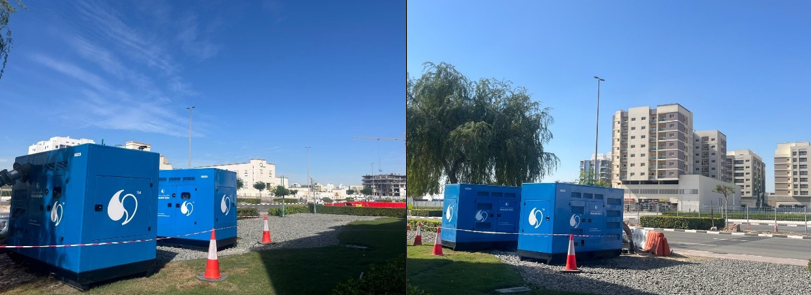
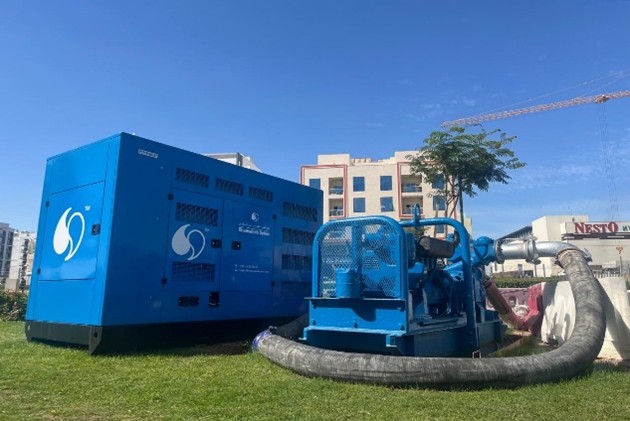
Within the market, this change in thinking is already visible. Khansaheb Sykes has witnessed a clear increase in demand for dewatering solutions, including both wellpoint and deep well systems, reflecting the growing complexity and scale of projects across the region. This shift demonstrates how developers and contractors are integrating water management into early planning stages rather than treating it as a reactive measure.
At the same time, municipalities are placing greater emphasis on contingency planning ahead of predicted rainfall events. Pre-emptive storm water management and temporary infrastructure support are becoming essential tools for protecting public assets, reducing disruption and maintaining operational continuity during periods of adverse weather.
For leadership teams, the lesson is broader than any single service or solution. Resilience is achieved not through last minute intervention but through early planning, scenario thinking and investment in preparedness.
Digital transformation is also influencing how infrastructure resilience is managed. Data monitoring, remote asset visibility and predictive analysis are enabling faster and more informed decision making across projects.
The wider leadership insight is that technology delivers real value when integrated into operational strategy. Data-led decision making is helping organisations improve efficiency, manage risk and support sustainability goals while strengthening overall project performance.
In sectors ranging from construction and utilities to industrial development, smarter infrastructure management is becoming a defining feature of successful delivery.
Expansion across the GCC continues to attract businesses from around the world. However, sustainable growth depends on understanding that regional strategy must always be supported by local execution.
Several leadership principles consistently underpin successful expansion. Growth should be driven by proven operational strengths that can be adapted to local conditions. Trust is developed through consistent delivery and visible leadership commitment, particularly during operational challenges. High growth environments can encourage over expansion. Strong leadership ensures growth is supported by technical capability and operational readiness. Each GCC market operates differently. Strategies must reflect local infrastructure conditions, regulations and practical realities.
As infrastructure projects become more complex, the next generation of leaders will need to combine commercial awareness with operational understanding. Organisations investing in mentorship, technical development and cross-market exposure are building leadership pipelines capable of sustaining long term growth and adapting to changing market demands.
Looking ahead, the GCC’s direction is clear. Infrastructure investment and economic diversification will continue to shape opportunity across the region for years to come. The question for leaders is not whether growth will continue, but how resilient that growth will be.
The increasing focus on dewatering, storm water contingency planning and infrastructure preparedness reflects a broader leadership shift toward proactive risk management and sustainable delivery. These areas may not dominate headlines, but they are critical in ensuring projects succeed safely, efficiently and on time.
The UAE and Saudi Arabia are demonstrating that transformation at scale requires both vision and operational readiness. As the region continues to evolve, the leaders who prioritise resilience alongside expansion will not only participate in growth but will help shape the infrastructure foundations supporting the GCC’s future.
Author: Tom Lane Middle East Managing Director at Khansaheb Sykes

Thomas Lane is Middle East Managing Director for Khansaheb Sykes LLC, Andrews Sykes Hire Saudi Limited, Sykes Pumps International, and their regional subsidiaries, leading specialist infrastructure support operations across the GCC. With over two decades of experience in asset-intensive industrial equipment, dewatering and infrastructure services, he focuses on operational excellence, strategic growth and building resilient, scalable businesses that support the region’s evolving construction and infrastructure landscape.
Events Calendar
Upcoming Events

BCCD Breakfast Networking
Wed, 21st Oct 2026
Reform Social & Grill
Kickstart your morning with valuable connections & conversations. This casual yet engaging... Read more

Quick Connect: Meet, Greet, Repeat!
Thu, 22nd Oct 2026
Pronto, Fairmont Dubai
Join us for an exciting evening of speed networking that’s all about making new connecti... Read more

Breast Cancer Awareness Morning
Tue, 27th Oct 2026
SEE Institute
October is Breast Cancer Awareness Month, a time to bring a difficult subject into the ope... Read more


