Dubai Real Estate in 2026: A Market Shaped by Maturity, Not Momentum | By Asad Khan, Chief Executive Officer of Invest Dubai
Date Posted:Fri, 23rd Jan 2026

Every property cycle has a moment when the conversation changes. Having worked in and out of Dubai since 2003, I have seen multiple phases of expansion, correction and recovery. Looking ahead to 2026, Dubai’s next chapter feels less about explosive growth and more about structure, selectivity and sustainability.
What distinguishes the current cycle from earlier ones is not momentum, but learning. Dubai today is not a city chasing headlines; it is refining its role as a global centre for living, business and long-term capital.
Tourism and global events will continue to matter, but they are no longer the primary drivers of demand. Dubai’s appeal to entrepreneurs, multinational firms and regional headquarters remains strong, supporting both owner-occupier and rental markets. Historically, the post-Expo phase brings normalisation rather than decline, and prime locations such as Downtown Dubai, Dubai Marina and Palm Jumeirah tend to retain relevance well beyond any single event cycle, supported by corporate leasing, international visibility and liquidity.
A more important, and often underestimated, driver is population growth. According to the Dubai Statistics Centre, Dubai’s population surpassed 3.7 million residents in 2024, up from approximately 3.55 million in 2022. This represents a net increase of around 120,000 to 150,000 residents per year. Unlike earlier growth phases, this expansion is not driven by short-term labour inflows alone. It is increasingly underpinned by long-term residency visas, corporate relocations, and the expansion of sectors such as finance, technology, healthcare and logistics. In real estate terms, this translates into sustained demand for tens of thousands of housing units annually, particularly in well-connected, mid-market communities where affordability and quality of life intersect.
Transaction data supports this shift from sentiment-driven activity to structural depth. DXB Interact data shows that 2023 recorded over 130,000 property transactions, one of the highest annual totals on record, with 2024 maintaining similarly elevated volumes and total transaction values exceeding AED 400 billion. Importantly, this activity has not been confined to ultra-luxury assets. Transaction growth has been broad-based, with strong volumes in sub-AED 2.5 million apartments, townhouses and villas in master-planned communities, and a noticeable increase in secondary market transactions. This depth improves liquidity and exit options, reinforcing Dubai’s evolution into a settlement market rather than a trading one.
On the supply side, Dubai remains disciplined, though never entirely predictable. New projects continue to be delivered in waves rather than floods. The key question for 2026 will not be how much supply enters the market, but where it is located and whom it serves. When luxury supply accelerates faster than mid-market housing, pricing becomes more selective and value shifts toward developments with genuine end-user appeal. Increasingly, buyers are prioritising master planning, infrastructure, sustainability and long-term liveability over standalone developments.
Pricing dynamics are therefore likely to be nuanced. Dubai rarely moves in a straight line. Periods of rapid appreciation tend to be followed by consolidation rather than sharp corrections. By 2026, the more probable scenario is stabilisation with pockets of growth. Prime assets in established locations are likely to hold value or appreciate modestly, while secondary or overpriced stock may stagnate or soften. Rental income is becoming a central part of the investment equation, particularly as population growth continues to support occupancy levels. With the UAE dirham pegged to the US dollar, interest rates remain a variable to monitor, but current financing conditions are materially more stable than in previous cycles.
Regulation remains one of Dubai’s most underappreciated strengths. Mandatory escrow accounts, clearer foreign ownership rules, visa reforms and an investor-friendly tax environment have reduced systemic risk. While no market is immune to global shocks, Dubai today is better regulated, less leveraged and more end-user driven than in past cycles.
There are, however, risks and common mistakes investors should remain mindful of. Overpaying for brand without regard to location or supply dynamics, underestimating service charges, and assuming uniform price growth across all segments are frequent errors. Dubai is increasingly a two-speed market, and differentiation matters.
So where does this leave investors and end-users?
Prime residential assets are likely to remain resilient, though increasingly tied to global wealth cycles. Mid-market housing in well-planned communities may offer the strongest risk-adjusted returns, supported by population growth and rental demand. Luxury and ultra-luxury will continue to attract attention, but pricing will be selective and driven by quality rather than branding alone.
By 2026, success in Dubai real estate will come down to clarity of objective. Yield, capital appreciation, or a combination of both each requires a different strategy. Location, developer credibility, infrastructure access and long-term liveability will matter more than speculative timing.
A market crash in Dubai appears unlikely. Equally, a runaway boom is improbable. What lies ahead is a more mature, two-speed market where strong assets compound and weaker stock drifts.
Dubai no longer rewards impatience.
It rewards understanding.
For those who approach the city not as a short-term trade but as a long-term proposition, the opportunity remains very much alive.
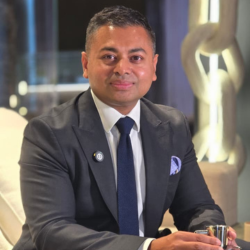
Author: Asad Khan, Chief Executive Officer of Invest Dubai
Events Calendar
Upcoming Events

BCCD Breakfast Networking
Wed, 21st Oct 2026
Reform Social & Grill
Kickstart your morning with valuable connections & conversations. This casual yet engaging... Read more

Quick Connect: Meet, Greet, Repeat!
Thu, 22nd Oct 2026
Pronto, Fairmont Dubai
Join us for an exciting evening of speed networking that’s all about making new connecti... Read more

Breast Cancer Awareness Morning
Tue, 27th Oct 2026
SEE Institute
October is Breast Cancer Awareness Month, a time to bring a difficult subject into the ope... Read more


