Unveiling Insights From one of the Largest Infrastructure Asset Projects in the Region - Cynthia Corby, Partner at Deloitte Middle East in Conversation with the Executive Chairman of Dubai Aviation City Corporation and Dubai South
Date Posted:Thu, 8th May 2025

Deloitte announced the release of their latest edition of their yearly GCC Powers of Construction report in October 2024. The construction industry's growing focus on sustainability is driving a shift in behavior and collaboration towards a holistic approach to asset performance throughout its lifecycle.
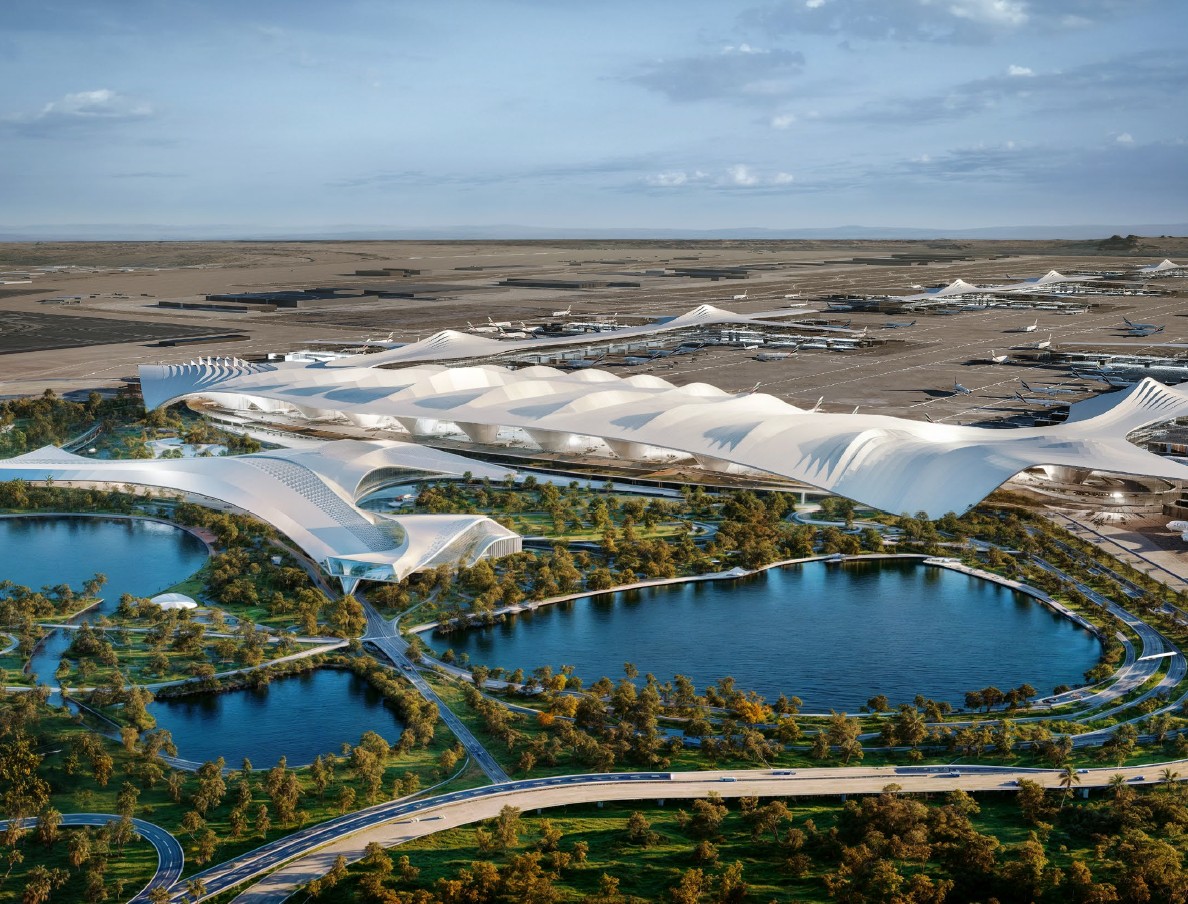
This shift is expected to lead to improved decision-making, benefiting all those involved in this industry. The 13th edition of the GCC Powers of Construction offers insights and expert perspectives into the challenges and opportunities for the construction industry to embrace sustainability. Please refer to the below key feature article - written by Cynthia Corby, Partner, Regional Construction Leader at Deloitte Middle East - which is a conversation with His Excellency Mr Khalifa Al Zaffin, Executive Chairman of Dubai Aviation City Corporation and Dubai South on “Unveiling insights from one of the largest Infrastructure asset projects in the region” focusing on the Al Maktoum International Airport.
Click here to read more about Deloitte's GCC Powers of Construction Report 2024.
"Given the exciting announcement about the commencement of construction for the World’s Largest International Airport, Al Maktoum International Airport (AMIA), I had the privilege of interviewing the Executive Chairman of the Group that owns Dubai’s airports, His Excellency Khalifa Al Zaffin.
The announcement made on Sunday April 28, 2024, outlined the Dhs128 billion project will be five times the size of the existing Dubai International Airport when it is completed. The existing airport site in Dubai South, also known as Dubai World Central, which is where AMIA will be located, serves a small fraction of the planned 260 million passengers that AMIA will eventually have capacity for and which is a significant increase from a record 90 million passengers who flew through Dubai international Airport (DXB) for the year to December 2023.
The airport will be at the center of the 140 square kilometer project know as Dubai South. There are five clustered zones that include the Dubai Logistics City, Commercial City, Residential City, Aviation City and the Golf City. It will host the world’s leading companies in the logistics and air transport sectors, which will bring a whole host of new jobs to Dubai and a significant increase in activities has already commenced following this announcement.
There will be more than 400 aircraft gates, and five parallel runways with the highest operational specifications. The airport will span 70 square kilometers once fully complete. It will also see all operations currently at Dubai International Airport eventually move over to Al Maktoum International Airport in the coming years. His Highness Sheikh Ahmed bin Saeed Al Maktoum, president of the Dubai Civil Aviation Authority, CEO and founder of the Emirates Group and chairman of Dubai Aviation City Cooperation (DACC), said in the announcement in April that the first phase of the project will be ready within 10 years and will accommodate 150 million passengers annually. Set out below are the questions I posed to His Excellency for us to understand more around the scale of this project and the process and plans to make this a reality.
In your role as the Executive Chairman of the Parent Company owning one of the largest infrastructure asset projects in the region can you walk me through the key factors that were considered when assessing the feasibility of the new airport project, and how were these factors prioritized?
A: The aviation sector is a key pillar in Dubai’s vision to be a vital player in the world’s future, and our growth to date, including our recovery since the pandemic, has set the trajectory for the future growth. At DXB we are limited by a certain level of capacity, and it is the forecast growth levels together with our continuous desire to improve the level of service experienced by our customers that were the key drivers for the new airport concept. The airport megaproject, including the surrounding Dubai South masterplan, will allow for continuous development for generations to come and is reflective of the foresight and ambition of Dubai, which will ultimately become the aviation capital of the world.
What if any best practice principles were applied in this process from lessons learnt in the past when preparing for such a large scale infrastructure investment?
A: There are a number of key elements which are being considered, some of which form part of our learning experience from DXB, and some of which have evolved due to the size and scale of the AMIA project, and the Dubai Finance guidelines around PPP funding. Aside from the sustainability goals, a key element of our ultimate design is a modular, multiphased approach, which will be aligned to anticipated passenger growth and increasing passenger demands. This will ensure that we are nimble, efficient and are always able to incorporate the latest technology as well as meeting increasing passenger demands. We are prioritizing life cycle costing in all of our feasibility and capex planning to ensure a longer-term view of the required investment is taken. From a passenger experience perspective, the new airport will be revolutionary, with stateof- the-art technologies deployed for eliminating congestion and facilitating unhindered airport operations. These will include an advanced traffic curbside management system, an uninterrupted automated people mover system (APM), and intuitive way-finding technology throughout the concourses and terminals, which will all seamlessly carry travelers to their gate. Planning an abundance of retail, food and beverage, relaxation and entertainment offerings will ensure that passengers not only have a great experience, but that we also maximize the revenues generated across the airport real estate, and our planned return on investment which was a key factor of our feasibility study.
Can you describe the approach that has been adopted when assessing best ways to fund the project in the context of the Dubai government’s PPP law and if this has been considered at all in your project?
A: Dubai’s strategic vision; to drive sustainable economic growth; will, amongst other things, be achieved through fostering productive partnerships between the public and private sectors. We are very fortunate to be supported by the Dubai Finance PPP team, who have issued comprehensive guidance on how to approach PPP projects and ensure that we create the ideal conditions for private sector companies who have the necessary capabilities to contribute to Dubai’s future. We consider the PPP law, and the Dubai Finance detailed guidelines in every project that is assessed - from the initial screening stage, all the way through to contract inception. We ensure that detailed feasibility studies, together with robust financial models are prepared as well as carrying out the necessary technical and legal analysis. This allows us to provide a sound basis to monitor the performance of our investments against these financial models and planned outcomes.
What would you describe as the key success factors for consideration of PPP funding given you recently announced transaction with Empower on the aviation district cooling assets?
A: Through our partnership with Empower, the DACC Group has, and will continue to benefit from Empower’s industrial leadership, innovative technologies and quality of expertise, which is fully aligned with our ambition to deliver streamlined operations at DXB. I would consider the critical success factors here to be (1) that we are supported by a strong technical partner, and (2) that the relationship is held together with a clear framework agreement which has been well thought through with adequately and fairly allocated risks. Striking this balance, ensures that there is a mutual benefit for all parties and is critical for the success of a long-term partnership.
What would you say are the most important elements of a successful large-scale capital programme, and how will these elements be incorporated into the construction of the new airport project and how will all key stakeholders monitor and measure these elements?
A: There are a number of key elements which lead to successful program delivery, and without alignment of all of them, capital projects, especially the larger ones, can go off track very quickly. The DACC Group have deep experience in delivering large-scale projects; evident from the delivery of the existing terminals and concourses at DXB. We have found that the following are the most important elements:
1. Having a clear vision, project scope and definition which is endorsed by leadership.
2. Having a first-rate engineering and project management team.
3. Having good governance and transparency from the start, which importantly includes all stakeholders to ensure we achieve an optimum outcome for all.
DACC benefit from the continuous support from His Highness Sheikh Mohammed bin Rashid Al Maktoum and our Group Chairman; Shiekh Ahmed bin Saeed Al Maktoum who have a clear and unwavering vision for Dubai’s aviation industry. It is through this leadership that visions become reality. DAEP, led by H.E. Suzanne Al Anani, continuously raises the bar in terms of value engineering, risk identification and project management. Across the Group, we ensure that there is rigorous communication, reporting and internal accountability for project Goals, which will be continually monitored as the project develops. Dubai Airports, Emirates Airlines and Fly Dubai are also heavily involved in the design to ensure we deliver the differentiated experience that their passengers have become accustomed to. This collaborative approach ensures we all collectively deliver on the vision of Dubai.
How will the investment on the new airport project be monitored and evaluated to ensure that it is meeting its objectives, both in terms of financial outcomes and other economic and key performance indicators given the importance of the aviation industry to Dubai’s economy?
A: Supported by the Dubai Finance, together with collaboration across the DACC Group, we have developed a long-term financial roadmap which sets out all of the potential different business models in the new airport environment. This covers all elements of capital expenditure, evenues and operational costs, and this will be the key tool against which we monitor the future performance and investment.
What are some of the potential risks and challenges associated with the new airport project, and how will these be mitigated?
A: This is a huge project and we are working towards a set timetable. Amongst other things, this project brings risks such as delays, schedule disruptions, cost overruns, and construction capacity in the industry. DAEP have unrivalled experience in delivering huge scale complex projects, and they have consistently managed to deliver on time and at superb quality and we expect nothing less this time. Supported by very clear governance around PPP guidelines together with clear financial models against which the CAPEX budgets will be monitored, also helps to significantly mitigate the risk profile.
How do you see a project of this size and scale driving positive economic impact in the Dubai market for the supply chain and all associated industries, and the broader real estate that surrounds the airport, specifically Dubai South which also falls under your responsibility as Executive Chairman of Dubai South?
A: Al Maktoum will be five times the size of the current Dubai International Airport, and will ultimately reach a capacity of 260 million passengers per annum. Given the size of the project, the development period alone will have a huge impact on the level of activity around the Dubai South area, in terms of the sourcing of construction materials, the required labor force and related government visas and permits. This will impact all sectors of construction from planning, core infrastructure and specialized technology providers and all associated businesses including SMEs.
The aerotropolis will generate an estimated workforce and residential requirement for over a million people living and working in Dubai South. Moreover, the strategically placed logistics district seamlessly connects AMIA to the Jebel Ali seaport and will be home to the world’s leading companies in the logistics and aviation sector. We expect the new airport to completely transform the geographical makeup of the Emirate, and Dubai South will be at the heart of this.
How do you envisage embracing new technology throughout the construction phase and also in the operations of a new state of the art airport?
A: The new airport will allow us to really embrace innovation and completely reinvent the passenger journey and experience, with connectivity and accessibility being prioritized. It will provide cutting-edge technologies, unrivalled levels of passenger experience with state-of-the-art aviation support facilities. We continue to see an exponential growth in technology together with a greater focus on mitigating environmental emissions and we are embracing an integrated approach. This will ensure that we are able to redefine the standards of excellence for our passengers whilst aligning with the UAE’s vision for a sustainably built environment.
How has sustainability been considered as part of the design and the operation of the new airport and how will this be measured in terms of success factors and areas for continuous improvement?
A: The new AMIA airport will be a showcase of global innovation in relation to airport technology and sustainability. We are targeting the LEED Gold for sustainability and this target is the foundation for all of our planning, procurement and design. The airport terminal and concourses will rely on clean energy sources such as photovoltaic solar panels and will be enveloped by solar glazing to control energy inputs. We are working closely with Dubai Municipality to enable a zero waste to landfill recycling strategy and the improved technology is expected to cut water consumption by about 70%.
What do you define as success in 10 years’ time when the airport is ready to open its doors in 2034?
A: In 10 years’ time we will have successfully achieved the vision as announced by His Highness Sheikh Mohammed bin Rashid Al Maktoum in 2024. We will have developed the largest airport in the world, the passengers will have the highest level of experience, and we will have solidified the place of Dubai on the map of importance in not only aviation and travel, but in technology and sustainability.
Interviewed by Cynthia Corby
Partner I Regional Construction Leader
Deloitte Middle East
Click here to read more about Deloitte's GCC Powers of Construction Report 2024.

Events Calendar
Upcoming Events

BCCD Breakfast Networking
Wed, 21st Oct 2026
Reform Social & Grill
Kickstart your morning with valuable connections & conversations. This casual yet engaging... Read more

Quick Connect: Meet, Greet, Repeat!
Thu, 22nd Oct 2026
Pronto, Fairmont Dubai
Join us for an exciting evening of speed networking that’s all about making new connecti... Read more

Breast Cancer Awareness Morning
Tue, 27th Oct 2026
SEE Institute
October is Breast Cancer Awareness Month, a time to bring a difficult subject into the ope... Read more


